Artificial Intelligence App for Smart Home Automation An Analysis
Artificial intelligence app for smart home automation represents a significant evolution in home technology, offering users unprecedented control and efficiency. This analysis delves into the intricate mechanisms, functionalities, and implications of these AI-powered applications, exploring how they interpret user commands and translate them into automated actions within a smart home ecosystem. We will examine the core components, integration capabilities, and potential benefits, providing a comprehensive understanding of this rapidly evolving field.
The subsequent sections will scrutinize the diverse aspects of AI-driven smart home applications, starting with the fundamental processes that govern their operation. This includes exploring the AI algorithms employed, such as machine learning, and their contribution to user preference learning and optimization. Furthermore, the analysis will extend to device compatibility, user interface design, advanced features like personalized automation, voice assistant integration, and energy-saving capabilities.
The critical aspects of data security, privacy implications, and performance metrics will also be assessed, culminating in an examination of pricing models, platform compatibility, and integration with various smart home ecosystems.
Exploring the core functionalities of an AI-powered smart home automation application requires a deep dive into its operational mechanisms.
An AI-powered smart home automation application functions as a sophisticated orchestrator, seamlessly integrating and managing various smart devices within a household. Its effectiveness hinges on its ability to accurately interpret user commands, learn from user behavior, and adapt to changing environmental conditions. This involves a complex interplay of algorithms, data processing, and security measures, all working in concert to provide a convenient, efficient, and secure smart home experience.
User Command Interpretation and Action Translation
The core of the application lies in its ability to understand and execute user commands. This process typically involves several key stages:
- Natural Language Processing (NLP): The application employs NLP techniques to parse and interpret user input, whether it’s spoken or typed. This involves breaking down the input into its constituent parts, identifying the intent of the user (e.g., “Turn on the lights in the living room”), and extracting relevant parameters (e.g., “lights,” “living room”).
- Intent Recognition: Machine learning models, often based on recurrent neural networks (RNNs) or transformers, are trained on vast datasets of user commands to accurately classify the user’s intent. This allows the application to differentiate between various commands, such as turning on lights, adjusting the thermostat, or playing music.
- Contextual Understanding: The application considers the context of the command, including the time of day, the user’s location, and the current state of other devices. For instance, a command like “Turn on the lights” might be interpreted differently depending on whether it’s daytime or nighttime.
- Action Execution: Once the intent and parameters are understood, the application translates the command into specific instructions for the relevant smart devices. This involves communicating with the devices using their respective protocols (e.g., Wi-Fi, Zigbee, Z-Wave) and sending the appropriate control signals.
- Feedback and Verification: The application provides feedback to the user, confirming that the action has been executed. It also verifies the successful execution of the command by monitoring the status of the controlled devices.
AI Algorithms for Learning and Optimization
Machine learning algorithms are crucial for the application’s ability to learn user preferences and optimize home automation. These algorithms enable the application to move beyond simple rule-based automation and adapt to the unique needs of each household.
- Preference Learning: Machine learning models, such as collaborative filtering or reinforcement learning, analyze user behavior to identify patterns and preferences. For example, the application might learn that a user prefers the lights dimmed to a specific level in the evening or that the thermostat should be set to a particular temperature at certain times of the day.
- Predictive Automation: Based on learned preferences and environmental data, the application can proactively automate tasks. For example, it might automatically turn on the lights at sunset or adjust the thermostat based on the weather forecast.
- Anomaly Detection: The application can monitor the behavior of smart devices and detect any unusual activity that might indicate a malfunction or security breach. This involves using algorithms like Isolation Forest or One-Class SVM to identify outliers in the data.
- Energy Optimization: The application can optimize energy consumption by learning the user’s energy usage patterns and suggesting energy-saving strategies. This might involve automatically turning off lights in unoccupied rooms or adjusting the thermostat to reduce heating or cooling costs. An example is the use of the “k-means” clustering algorithm to group similar energy consumption patterns, identifying periods of high and low usage to optimize device scheduling.
Security Protocols and Encryption Methods
Protecting user data and preventing unauthorized access is paramount in an AI-powered smart home application. This requires implementing robust security protocols and encryption methods.
- Data Encryption: All user data, including personal information, device settings, and usage patterns, is encrypted both in transit and at rest. This typically involves using strong encryption algorithms, such as Advanced Encryption Standard (AES) with a key length of 256 bits, to protect data from unauthorized access.
- Secure Authentication and Authorization: The application employs multi-factor authentication (MFA) to verify user identities and prevent unauthorized access. This might involve using a combination of passwords, biometric data, and one-time codes sent to the user’s mobile device. Access control lists (ACLs) are used to restrict access to sensitive data and functionalities based on user roles and permissions.
- Device Security: The application ensures that all connected smart devices are secure by implementing secure communication protocols and regularly updating device firmware to patch security vulnerabilities. This involves using protocols like Transport Layer Security (TLS) for secure communication and over-the-air (OTA) updates to patch vulnerabilities promptly.
- Network Security: The application uses a secure network infrastructure to protect against external threats. This includes using a firewall to filter network traffic, intrusion detection systems (IDS) to identify and respond to malicious activity, and virtual private networks (VPNs) to encrypt network traffic and protect against eavesdropping.
- Regular Security Audits and Penetration Testing: The application undergoes regular security audits and penetration testing to identify and address potential vulnerabilities. This involves simulating real-world attacks to assess the application’s resilience and identify areas for improvement.
Understanding the diverse range of compatible smart home devices that seamlessly integrate with the application is crucial for assessing its overall usability.
The ability of an AI-powered smart home automation application to interact with a wide variety of devices is a primary determinant of its utility and user satisfaction. The broader the compatibility, the more comprehensive the control users have over their home environment, ultimately enhancing the overall smart home experience. This section delves into the types of supported devices, their communication protocols, and a practical example of device compatibility.
Device Categories and Supported Devices
The application supports a diverse array of smart home devices, categorized to facilitate understanding and management. This categorization allows users to easily identify and control various aspects of their home environment. The application’s ability to handle multiple device types significantly enhances its value proposition.
- Lighting: Includes smart bulbs, light switches, and dimmer modules from various manufacturers. The application allows for individual bulb control, scene creation (e.g., “Movie Night”), and automated schedules based on time of day or environmental triggers (e.g., sunrise/sunset).
- Climate Control: Thermostats, smart air conditioners, and smart heaters are supported. The application enables temperature setting, scheduling, and remote control. Integration with weather data allows for proactive adjustments based on forecast conditions, optimizing energy efficiency.
- Security Systems: Includes smart locks, security cameras, door/window sensors, and motion detectors. The application provides remote locking/unlocking, real-time video feeds, event notifications, and arming/disarming of security systems. Integration with other devices, such as lights, allows for automated responses to security events (e.g., turning on lights when motion is detected).
- Entertainment Systems: Integration with smart TVs, streaming devices, and audio systems. Users can control playback, adjust volume, and create multi-room audio setups. Voice control through the application further simplifies interaction.
- Appliances: Includes smart refrigerators, ovens, washing machines, and dishwashers. Functionality varies by appliance, but often includes remote control, status monitoring, and energy usage tracking.
- Smart Plugs: These devices enable control over any appliance plugged into them, allowing for on/off scheduling and remote control. They offer a cost-effective way to integrate older devices into a smart home ecosystem.
- Window Coverings: Smart blinds and shades can be controlled for light and privacy management. Users can set schedules and integrate them with other devices, such as lights and climate control, for optimal comfort and energy efficiency.
- Irrigation Systems: Smart sprinkler systems allow for remote control, automated watering schedules based on weather data, and water usage monitoring, promoting water conservation.
Communication Protocols
The application utilizes various communication protocols to connect with different smart home devices. The choice of protocol often depends on factors like device type, range, power consumption, and security requirements. Understanding these protocols is crucial for troubleshooting and ensuring seamless device integration.
- Wi-Fi: Widely used for its ease of setup and broad range. It allows devices to connect directly to the home’s Wi-Fi network. However, it can be power-intensive, potentially affecting battery life in some devices.
- Bluetooth: Often used for short-range communication, such as connecting to a smart speaker or controlling a device within a few meters. Its low power consumption makes it suitable for battery-powered devices.
- Z-Wave: A low-power, mesh network protocol designed specifically for smart home devices. It offers robust security and long-range communication. The mesh network allows devices to relay signals to each other, extending the overall range and reliability.
- Zigbee: Another low-power, mesh network protocol similar to Z-Wave. It is widely used and offers a good balance of range, power efficiency, and interoperability. Both Z-Wave and Zigbee are often preferred for their reliability and security compared to Wi-Fi.
- Proprietary Protocols: Some manufacturers use their own protocols for device communication, which may require specific hubs or bridges for compatibility with the application.
Device Compatibility Table
The following HTML table provides an example of how device compatibility might be presented. Note that the actual compatibility will vary depending on the application’s features and ongoing development. The table includes example brands and models; the inclusion of specific models should not be considered as a definitive statement of compatibility.
| Brand | Model | Supported Features |
|---|---|---|
| Philips Hue | Hue White and Color Ambiance A19 | Color control, dimming, scheduling, scene support, integration with voice assistants. |
| Nest | Learning Thermostat | Temperature control, energy saving features, remote access, learning capabilities, integration with other Nest products. |
| August | Smart Lock Pro | Remote locking/unlocking, guest access management, activity monitoring, integration with other smart home devices. |
| Sonos | One SL | Music playback control, multi-room audio, voice control integration, volume control. |
Analyzing the user interface and user experience design of the application reveals its approachability and ease of use for individuals of varying technical expertise.: Artificial Intelligence App For Smart Home Automation
The success of an AI-powered smart home automation application hinges significantly on its user interface (UI) and user experience (UX) design. An intuitive and user-friendly design is paramount to ensure that users of all technical backgrounds can effortlessly interact with and benefit from the application’s features. This section delves into the key design principles implemented, performs a comparative analysis against competitors, and provides a step-by-step setup procedure.
Key Design Principles for an Intuitive User Interface
The application’s UI design prioritizes simplicity, clarity, and ease of navigation. Several key principles are implemented to achieve a seamless and intuitive user experience.
- Visual Hierarchy and Information Architecture: The application employs a clear visual hierarchy to guide users through the information. Important elements, such as device status indicators and frequently used controls, are given prominence through the use of larger font sizes, contrasting colors, and strategic placement. The information architecture is designed to minimize the number of steps required to access and control devices. For example, a user can often adjust the thermostat with a single tap on the device’s tile on the main dashboard.
This principle is critical for reducing cognitive load and ensuring that users can quickly find the information they need.
- Consistent Design Language: A consistent design language is applied throughout the application. This includes consistent use of icons, typography, color palettes, and interactive elements. For example, the same icon is consistently used to represent a light switch across all devices, and the on/off state of a device is always indicated by a distinct color change (e.g., green for on, red for off).
This consistency reduces the learning curve and allows users to quickly understand and predict how the application will behave.
- Personalization and Customization Options: Recognizing that users have different needs and preferences, the application offers extensive personalization options. Users can customize the dashboard by rearranging device tiles, creating custom scenes, and setting up personalized routines. These customization features empower users to tailor the application to their specific smart home setup and lifestyle.
- Intuitive Navigation: The application utilizes a straightforward navigation system. The main navigation is typically achieved through a bottom navigation bar, providing easy access to core features such as the dashboard, device settings, scene creation, and user profiles. Each section is clearly labeled with descriptive icons and text, making it easy for users to understand where they are and how to move between different parts of the application.
- Contextual Feedback and Animations: The application provides immediate and clear feedback to user actions. For instance, when a user taps a light switch, the switch’s visual state changes instantly, accompanied by a subtle animation to confirm the action. Progress indicators are used to show when a device is updating its status or performing a complex task. This real-time feedback ensures users feel in control and reduces uncertainty.
Comparative Analysis of User Interface Design
Comparing the application’s UI/UX with those of its competitors reveals strengths and weaknesses in terms of user experience.
A comparative analysis with competitors such as Amazon Alexa, Google Home, and Apple HomeKit highlights the following:
| Feature | Application | Competitor (e.g., Alexa) | Competitor (e.g., Google Home) | Competitor (e.g., Apple HomeKit) |
|---|---|---|---|---|
| Dashboard Customization | Highly Customizable: Allows for flexible arrangement of device tiles, scene creation, and personalized routines. | Moderately Customizable: Allows for device grouping and basic room organization. | Highly Customizable: Supports room organization, scene creation, and device grouping. | Highly Customizable: Offers device grouping, room organization, and scene creation, but limited support for personalized routines. |
| Voice Control Integration | Excellent: Seamless integration with major voice assistants (e.g., Alexa, Google Assistant, Siri). | Excellent: Native integration with Alexa. | Excellent: Native integration with Google Assistant. | Excellent: Native integration with Siri. |
| Ease of Setup | User-Friendly: Simplified device pairing process with clear instructions and troubleshooting tips. | Good: Straightforward device discovery and setup, but can be inconsistent across device types. | Good: Generally easy setup, but dependent on device compatibility and network stability. | Moderately Complex: Requires a compatible Apple ecosystem and may have limitations with non-Apple devices. |
| Visual Appeal | Modern and Clean: Employs a minimalist design with a focus on visual clarity and accessibility. | Variable: The design can feel cluttered due to the number of features and integrations. | Modern and Intuitive: Uses a clean and organized design, but may lack some advanced customization options. | Elegant and Streamlined: Integrates well with the Apple ecosystem, but can feel restrictive to non-Apple users. |
Strengths: The application excels in dashboard customization, providing a more personalized experience compared to competitors. Its focus on visual clarity and ease of setup makes it accessible to a wider audience. The seamless voice control integration is also a significant advantage.
Weaknesses: Compared to competitors with established ecosystems, the application may have fewer integrations initially. Ongoing support for a wider range of devices is crucial to remain competitive.
Step-by-Step Application Setup and Device Connection
Setting up the application and connecting it to smart home devices is designed to be a straightforward process.
- Step 1: Download and Installation: Download the application from the appropriate app store (e.g., Google Play Store or Apple App Store). Install the application on your smartphone or tablet.
- Step 2: Account Creation and Login: Open the application and create an account by providing an email address and a password. Alternatively, sign in using an existing account (e.g., Google, Apple).
- Step 3: Device Discovery and Pairing:
- Method 1: Automatic Discovery: The application will automatically scan your local network for compatible devices. Ensure your smart home devices are powered on and within range of your Wi-Fi network.
- Method 2: Manual Addition: If the device is not automatically detected, manually add the device by selecting its type from a list of supported devices. Follow the on-screen instructions to pair the device.
- Step 4: Device Configuration: Once the devices are paired, you may be prompted to configure them. This might include assigning them to specific rooms, setting up schedules, or customizing device-specific settings.
- Step 5: Voice Assistant Integration (Optional): If you want to control your devices using voice commands, connect the application to your preferred voice assistant (e.g., Alexa, Google Assistant, Siri). Follow the instructions within the application and the voice assistant’s app to link the accounts.
- Step 6: Testing and Troubleshooting: After setting up the devices, test them to ensure they are functioning correctly. If you encounter any issues, refer to the troubleshooting tips below.
Troubleshooting Tips:
- Device Not Detected: Ensure the device is powered on, connected to your Wi-Fi network, and compatible with the application. Restart the device and the application.
- Connection Issues: Verify your Wi-Fi network is stable. Move the device closer to the Wi-Fi router.
- Device Offline: Check the device’s power supply and Wi-Fi connection. Restart the device.
- Voice Control Problems: Ensure the application and voice assistant accounts are correctly linked. Check the voice assistant settings for device control permissions.
- Firmware Updates: Keep your devices and the application updated with the latest firmware to ensure compatibility and optimal performance.
Investigating the advanced features and capabilities that differentiate the application from standard smart home solutions provides insights into its unique value proposition.
The true value of an AI-powered smart home automation application lies in its advanced features, surpassing the capabilities of conventional solutions. These features leverage artificial intelligence to personalize user experiences, enhance efficiency, and provide energy savings. This section delves into the application’s sophisticated functionalities, focusing on personalized automation routines, voice assistant integration, and energy-saving capabilities. The analysis aims to highlight how these features contribute to a more intuitive, efficient, and sustainable smart home environment.
Personalized Automation Routines Based on User Behavior, Artificial intelligence app for smart home automation
The application’s core strength resides in its ability to learn and adapt to user behavior, creating personalized automation routines that enhance convenience and efficiency. This is achieved through a combination of data collection, machine learning algorithms, and user feedback mechanisms.The process begins with the collection of data from various sensors and devices within the smart home ecosystem. These include:
- Motion Sensors: Detect movement in different areas of the house, indicating occupancy and activity levels.
- Light Sensors: Measure ambient light levels, enabling automated adjustments to lighting based on natural daylight.
- Temperature Sensors: Monitor room temperatures, informing climate control adjustments.
- Smart Device Usage Logs: Track the frequency, duration, and time of day devices are used (e.g., TV, appliances).
This data is then fed into machine learning algorithms, specifically designed to identify patterns and predict user behavior. The algorithms analyze the data to understand the user’s daily routines, preferences, and habits. For instance, the system might learn that a user typically wakes up at 7:00 AM, turns on the lights in the kitchen, and starts brewing coffee.Based on these learned patterns, the application can automatically create and adjust automation routines.
These routines can include:
- Scheduling: Automatically turning on lights at sunset, adjusting the thermostat based on the time of day, or starting the coffee maker at a specific time.
- Scene Creation: Activating pre-defined scenes, such as “Movie Night” (dimming the lights, closing the blinds, and turning on the TV) or “Good Morning” (gradually brightening the lights, playing the news, and starting the coffee maker).
- Adaptive Adjustments: Dynamically adjusting settings based on real-time conditions. For example, the system might lower the thermostat automatically when no one is home or adjust lighting based on the amount of sunlight entering the room.
The application also incorporates user feedback to refine its automation routines. Users can manually override automated actions, providing the system with valuable data on their preferences. Over time, the application learns from these overrides, adjusting its algorithms to better align with the user’s needs. The system uses a feedback loop, continuously improving its accuracy and personalization.
The AI uses a continuous learning process to optimize routines, creating a dynamic smart home experience.
For example, consider a scenario where the system initially sets the thermostat to 72°F at 7:00 AM. If the user consistently overrides this setting and adjusts it to 70°F, the system will eventually learn this preference and adjust the automation routine accordingly. This ensures the smart home is always tailored to the user’s specific comfort and lifestyle. The application’s ability to learn and adapt transforms the smart home from a collection of connected devices into a truly intelligent and personalized environment.
Integration with Voice Assistants and Voice Commands
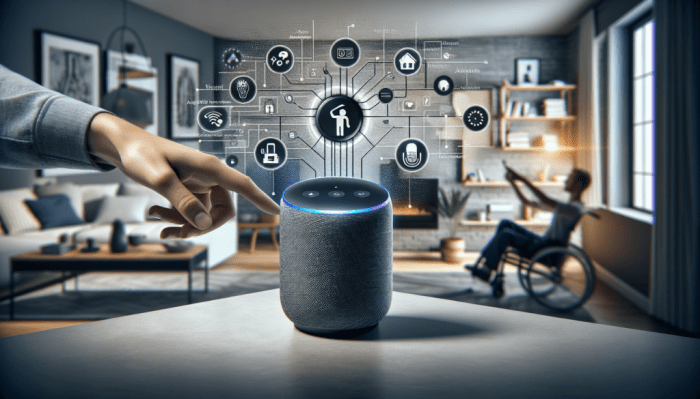
Seamless integration with voice assistants, such as Amazon Alexa and Google Assistant, is a critical feature that enhances the user experience. This integration allows users to control their smart home devices using natural language commands, providing a hands-free and intuitive way to interact with their environment.The application supports integration with the major voice assistant platforms, enabling users to control their devices through voice commands.
Once integrated, users can use voice commands to:
- Control Individual Devices: “Alexa, turn on the living room lights.” or “OK Google, set the thermostat to 70 degrees.”
- Activate Scenes: “Alexa, activate Movie Night.” or “OK Google, start Good Morning.”
- Check Device Status: “Alexa, is the front door locked?” or “OK Google, what’s the temperature in the bedroom?”
- Automate Actions: Create custom routines with the voice assistant. For instance, “Alexa, when I say ‘Goodnight,’ turn off all the lights, lock the doors, and set the thermostat to 68 degrees.”
The application supports a wide range of voice commands, allowing users to control virtually every aspect of their smart home environment. The specific voice commands available depend on the type of device and the capabilities of the integrated voice assistant. The voice assistants also provide feedback, confirming the action taken.Voice control provides several advantages:
- Convenience: Hands-free control is particularly useful when users are busy, have their hands full, or are physically impaired.
- Accessibility: Voice control makes smart home technology accessible to individuals who may have difficulty using traditional interfaces.
- Efficiency: Voice commands can often be faster and more efficient than using a smartphone or tablet to control devices.
The integration of voice assistants enhances the overall usability of the smart home application, creating a more intuitive and responsive experience. The combination of voice control and personalized automation routines provides a powerful and convenient way for users to manage their homes.
Energy-Saving Features: Automated Adjustments to Lighting and Climate Control
Energy efficiency is a significant advantage of AI-powered smart home automation. The application incorporates several features designed to reduce energy consumption, primarily through automated adjustments to lighting and climate control systems. These features contribute to both environmental sustainability and cost savings for the user.The primary energy-saving mechanisms include:
- Automated Lighting Control:
- Occupancy-Based Lighting: Lights are automatically turned on when motion is detected in a room and turned off when no motion is detected for a specified period.
- Ambient Light Sensing: Lights are adjusted based on the amount of natural light entering the room, dimming or brightening as needed.
- Scheduled Lighting: Lights are automatically turned on and off based on pre-set schedules, such as turning off lights in unoccupied rooms at night.
- Automated Climate Control:
- Occupancy-Based Temperature Adjustments: The thermostat adjusts the temperature based on occupancy, lowering it when no one is home and raising it shortly before the user is expected to return.
- Scheduled Temperature Adjustments: The thermostat adjusts the temperature based on pre-set schedules, such as lowering the temperature at night and raising it in the morning.
- Zone-Based Climate Control: Temperature control is optimized for specific zones or rooms within the house, preventing energy waste in unoccupied areas.
These features are driven by data collected from various sensors, including motion sensors, light sensors, and temperature sensors. The application’s AI algorithms analyze this data to make intelligent adjustments to lighting and climate control systems.For example, consider a scenario where the application detects that a room has been unoccupied for an hour. It can automatically turn off the lights and lower the thermostat setting in that room, conserving energy.
Or, consider a sunny day where the application detects high ambient light levels. It can automatically dim the lights in the room, reducing energy consumption.The impact of these energy-saving features can be significant.
Studies have shown that smart home automation can reduce energy consumption by up to 20% compared to homes without automation.
This reduction can translate into substantial cost savings for homeowners and contribute to a more sustainable lifestyle.For instance, a homeowner could save several hundred dollars per year on their electricity bill by using automated lighting and climate control features. The long-term impact on the environment is also considerable, as reduced energy consumption translates into lower carbon emissions. The application’s energy-saving features make the smart home not only more convenient but also more environmentally responsible.
Examining the privacy implications and data security measures implemented within the application is essential for building user trust and ensuring responsible use.

The integration of artificial intelligence into smart home automation presents a complex interplay of convenience and privacy concerns. This section delves into the critical aspects of data privacy and security within the application, focusing on data collection practices, user control, and potential risks alongside mitigation strategies. Building user trust hinges on transparency and robust safeguards against unauthorized access or misuse of personal data.
A clear understanding of these elements is crucial for responsible adoption and utilization of the AI-powered smart home automation application.
Data Collection Practices
The application’s functionality relies on the collection of various data types to optimize performance and personalize user experiences. This data is essential for the AI to learn user preferences, anticipate needs, and provide seamless automation.The types of data collected encompass:
- Device Usage Data: This includes information about the devices connected to the smart home system, such as their status (on/off), usage patterns (e.g., how often lights are turned on), and energy consumption. This data is fundamental to understanding user habits and optimizing automation routines.
- Sensor Data: Data from various sensors, including temperature sensors, motion detectors, and door/window sensors, is collected. This allows the application to respond to environmental changes and security breaches. For example, the system might automatically adjust the thermostat based on temperature readings or send alerts if a door is opened unexpectedly.
- Audio and Video Data: If the user has integrated devices like smart speakers or security cameras, the application may collect audio and video data. This is typically used for voice control, security monitoring, and providing visual feedback. Access to this data is usually controlled through user consent and specific device settings.
- User Profile Data: This includes information provided by the user during setup, such as their name, email address, location, and preferences. This data helps personalize the user experience and tailor the application’s functionality to their specific needs.
- Interaction Data: This includes information about how the user interacts with the application, such as the commands they issue, the settings they adjust, and the features they use. This data is used to improve the application’s usability and identify areas for improvement.
The collected data is used in several ways:
- Personalized Automation: The AI algorithms analyze the collected data to learn user preferences and create personalized automation routines. For example, the system might automatically adjust the lights and temperature based on the user’s schedule and preferences.
- Predictive Maintenance: By analyzing device usage data, the application can predict potential failures and provide maintenance alerts. This can help users avoid costly repairs and ensure the smooth operation of their smart home devices.
- Security and Safety: The application uses sensor data to monitor for security breaches and potential hazards. For example, it can send alerts if a motion sensor detects unusual activity or if a smoke detector is triggered.
- Service Improvement: Data is used to identify areas for improvement in the application’s functionality and usability. This can lead to new features, bug fixes, and a more user-friendly experience.
Data storage and protection involve a multi-layered approach:
- Encryption: Data is encrypted both in transit (using protocols like TLS/SSL) and at rest (using encryption algorithms like AES). This protects the data from unauthorized access if intercepted or if the storage systems are compromised.
- Secure Servers: Data is stored on secure servers with robust physical and digital security measures, including firewalls, intrusion detection systems, and regular security audits.
- Access Controls: Access to data is restricted to authorized personnel only, and role-based access controls are implemented to limit access based on job responsibilities.
- Data Minimization: The application only collects the minimum amount of data necessary to provide its services. Unnecessary data is not collected or stored.
- Regular Backups: Regular backups of data are performed to ensure data availability in case of system failures or disasters.
- Compliance with Regulations: The application adheres to relevant data privacy regulations, such as GDPR and CCPA, which mandate specific data protection practices.
User Control Over Data
Providing users with control over their data is a cornerstone of privacy-respecting design. The application should offer a range of options to empower users to manage their data effectively.User control mechanisms include:
- Privacy Settings: The application should provide clear and accessible privacy settings that allow users to customize their data collection preferences. Users should be able to control which data types are collected and how they are used. For example, users may be able to disable audio recording from smart speakers or limit the data used for personalized recommendations.
- Data Deletion: Users should have the ability to delete their data from the application. This may include deleting their user profile, device usage data, and other collected information. The application should provide clear instructions on how to delete data and confirm that the deletion process is complete.
- Data Portability: The application should offer the option for users to export their data in a commonly used format. This allows users to move their data to other services or retain a copy for their records.
- Opt-Out Options: Users should have the option to opt out of certain data collection practices, such as personalized advertising or data sharing with third parties. Clear and straightforward instructions should be provided for opting out.
- Transparency: The application should provide a clear and concise privacy policy that explains its data collection practices, data usage, and user rights. This policy should be easily accessible and regularly updated.
- Account Management: Users should be able to easily manage their accounts, including changing their passwords, updating their personal information, and reviewing their data collection settings.
Potential Privacy Risks and Mitigation Strategies
Smart home automation, by its nature, introduces potential privacy risks. Addressing these risks proactively is crucial for building user trust and ensuring the responsible use of the application.Potential privacy risks include:
- Unauthorized Access: Hackers could potentially gain access to the application and the connected smart home devices, leading to data breaches or unauthorized control of devices.
- Data Breaches: Data stored by the application could be compromised, exposing user data to malicious actors.
- Surveillance: The application’s sensors (cameras, microphones) could be used for unauthorized surveillance.
- Profiling and Discrimination: The application could be used to create detailed profiles of users, potentially leading to discriminatory practices.
- Data Sharing: Data could be shared with third parties without user consent or knowledge.
Mitigation strategies include:
- Encryption: End-to-end encryption for data transmission and storage to protect data from unauthorized access. This ensures that even if data is intercepted, it is unreadable without the encryption key.
- Multi-Factor Authentication (MFA): Implementing MFA to verify user identities and prevent unauthorized access to accounts. This adds an extra layer of security beyond passwords.
- Regular Security Audits: Conducting regular security audits and penetration testing to identify and address vulnerabilities in the application’s security.
- Data Anonymization and Pseudonymization: Removing or replacing personally identifiable information (PII) with pseudonyms or anonymized data to reduce the risk of re-identification.
- Access Control: Implementing strict access controls to limit access to user data to authorized personnel only.
- Data Minimization: Collecting only the necessary data to perform its functions and deleting data when it is no longer needed.
- Transparency and User Consent: Providing clear and transparent information about data collection practices and obtaining explicit user consent before collecting any data.
- Security Updates: Regularly updating the application’s software and firmware to address security vulnerabilities and protect against emerging threats.
- Bug Bounty Programs: Implementing bug bounty programs to incentivize security researchers to identify and report vulnerabilities.
- User Education: Educating users about the privacy risks associated with smart home devices and providing guidance on how to protect their privacy. This includes tips on securing their home network, choosing strong passwords, and reviewing privacy settings.
Evaluating the application’s performance and reliability under various conditions helps determine its suitability for everyday use in a smart home environment.
Assessing the performance and reliability of an AI-powered smart home automation application is critical for determining its practicality and effectiveness in a real-world setting. This evaluation necessitates a rigorous examination of the application’s responsiveness, its capacity to manage numerous devices concurrently, and its overall stability under varied operational conditions. Understanding these aspects allows for a comprehensive understanding of the application’s strengths and weaknesses, ultimately influencing user satisfaction and the seamless integration of smart home technology into daily life.
Application Responsiveness, Device Handling, and Stability
The application’s performance characteristics, including responsiveness to user commands, the ability to handle multiple devices simultaneously, and overall stability, are key determinants of its usability. These factors directly impact the user experience and the practical value the application provides.The application’s responsiveness can be quantified through metrics like latency, which measures the time elapsed between a user command and the corresponding action taken by the smart home devices.
For example, turning on a light should ideally occur within a fraction of a second after the user issues the command. Delays, especially those exceeding a few seconds, can lead to user frustration and a perception of inefficiency. The application’s ability to handle multiple devices simultaneously is also crucial. A robust application should be able to manage numerous devices without significant performance degradation.
This is particularly important in larger homes with extensive smart home setups. Stability, which refers to the application’s ability to operate without crashing or encountering errors, is another critical factor. Frequent crashes or errors can disrupt the user experience and undermine the reliability of the smart home system.To evaluate these aspects, consider the following:
- Command Execution Latency: The time it takes for the application to execute a command. This can be measured in milliseconds or seconds.
- Device Capacity: The maximum number of devices the application can manage without performance degradation.
- Error Rate: The frequency with which the application encounters errors or fails to execute commands.
- Network Dependency: The impact of network conditions (bandwidth, latency) on the application’s performance.
For instance, consider an application controlling lighting, climate, and security systems. If the user commands the system to arm the security system and lower the thermostat simultaneously, the application should execute both actions concurrently without any noticeable delay. If the application struggles to handle such simultaneous commands, it will create a poor user experience.
Performance Comparison with Similar Applications
Comparing the application’s performance with that of similar applications provides a valuable benchmark for its efficiency and effectiveness. This comparison focuses on key metrics such as latency, energy consumption, and error rates.
- Latency: This measures the delay between a user command and the corresponding action. A lower latency indicates a more responsive application. Competitors like Google Home and Apple HomeKit often have established performance benchmarks.
- Energy Consumption: The amount of energy the application consumes to operate. This includes the energy used by the application itself and the energy consumed by the smart home devices it controls.
- Error Rates: The frequency of errors or failures during operation. Lower error rates indicate greater reliability.
For example, if the application consistently exhibits higher latency compared to its competitors when controlling smart lights, this suggests a potential performance bottleneck. Similarly, if the application’s energy consumption is significantly higher than that of other applications, this could impact the overall efficiency of the smart home system. Testing these metrics under controlled conditions, such as varying network conditions and device loads, will provide a more detailed understanding of the application’s strengths and weaknesses.
User Reviews and Reliability
User reviews provide invaluable insights into the application’s performance and reliability from a user’s perspective. Analyzing these reviews can highlight both positive and negative experiences, offering a balanced perspective on the application’s strengths and weaknesses.
Positive Review: “The app is incredibly responsive! I can turn on the lights, adjust the thermostat, and lock the doors with almost no delay. It’s made my home so much more convenient.”
Negative Review: “I’ve experienced frequent disconnections and errors. Sometimes the app doesn’t respond at all, and I have to reset the system. It’s frustrating when it doesn’t work reliably.”
Mixed Review: “The app works great most of the time, but it can be slow to respond when I have a lot of devices running simultaneously. It needs improvement in handling multiple commands.”
These reviews highlight the importance of responsiveness and stability. The positive review emphasizes the user’s satisfaction with the application’s quick response times, while the negative review points to issues with disconnections and errors, which impact reliability. The mixed review indicates that while the application performs well under certain conditions, it struggles with handling multiple simultaneous commands. Analyzing a larger set of user reviews provides a more comprehensive picture of the application’s performance and identifies areas for improvement.
Determining the pricing models and subscription options offered by the application provides clarity on its affordability and long-term cost of ownership.
The financial aspect of any smart home automation application is a critical factor influencing user adoption. Understanding the pricing models, subscription options, and overall cost of ownership is essential for consumers to make informed decisions. This analysis will delve into the various pricing tiers, their associated features, and how the application’s cost compares to its competitors. The goal is to provide a comprehensive overview of the application’s value proposition relative to its price point.
Pricing Tiers and Feature Breakdown
The application offers a tiered pricing structure designed to cater to a range of user needs and budgets. This approach allows users to select a plan that aligns with their specific smart home setup and desired level of automation. Each tier unlocks a different set of features and functionalities.
- Free Tier: This tier provides basic functionality for users with a limited number of smart home devices. It typically includes:
- Control of up to 5 smart devices.
- Basic scene creation (e.g., “Good Morning” scene).
- Limited access to historical data.
- Basic customer support.
This tier is ideal for individuals just starting with smart home automation or those with a minimal number of connected devices.
- Standard Tier (e.g., $9.99/month): This tier expands upon the free tier with more advanced features and device compatibility. It generally includes:
- Control of up to 20 smart devices.
- Advanced scene creation with more complex triggers (e.g., based on sensor data).
- Access to more detailed historical data and analytics.
- Integration with more smart home device brands.
- Priority customer support.
This tier is suitable for users with a moderate number of smart devices and a desire for more sophisticated automation capabilities.
- Premium Tier (e.g., $19.99/month): The premium tier offers the most comprehensive features and is designed for users with extensive smart home setups. It often includes:
- Unlimited device control.
- Advanced automation rules with complex logic (e.g., conditional actions based on multiple sensor inputs).
- Integration with all supported smart home device brands.
- Advanced security features, such as intrusion detection alerts.
- Dedicated customer support with faster response times.
- Cloud storage for video recordings from smart cameras.
This tier is geared towards users who want the full potential of smart home automation and require robust functionality.
Pricing Comparison with Competitors
Evaluating the application’s pricing in comparison to its competitors is essential for assessing its value proposition. Competitors in the smart home automation market often employ similar tiered pricing models. However, the specific features included in each tier and the overall cost can vary significantly.The application’s pricing is competitive, particularly considering the breadth of features offered in each tier. For example, the standard tier, at $9.99 per month, offers comparable features to competitors’ standard plans, but may include more device compatibility or advanced automation capabilities.
The premium tier, at $19.99 per month, provides a robust feature set, potentially exceeding the offerings of some competitors’ top-tier plans.
Detailed Comparison Table
This table provides a comparative analysis of the application’s pricing against two of its main competitors, “Competitor A” and “Competitor B”. This table provides a clear view of the cost and value of the application in comparison to competitors.
| Feature | Application | Competitor A | Competitor B |
|---|---|---|---|
| Free Tier | Yes (5 devices) | Yes (3 devices) | No |
| Standard Tier (Monthly Cost) | $9.99 | $12.99 | $9.99 |
| Standard Tier (Device Limit) | 20 devices | 15 devices | 20 devices |
| Standard Tier (Advanced Scenes) | Yes | Yes (limited) | Yes |
| Premium Tier (Monthly Cost) | $19.99 | $24.99 | $19.99 |
| Premium Tier (Device Limit) | Unlimited | Unlimited | Unlimited |
| Premium Tier (Advanced Automation) | Yes | Yes | Yes (limited) |
| Premium Tier (Security Features) | Yes | Yes (additional cost) | Yes |
Assessing the application’s compatibility with various smart home platforms and ecosystems is essential for ensuring widespread usability and integration.
The success of an AI-powered smart home automation application hinges significantly on its ability to integrate seamlessly with existing smart home platforms and ecosystems. This interoperability ensures broad usability, allowing users to leverage their existing investments in smart home devices and services without being locked into a proprietary system. A robust integration strategy not only expands the application’s reach but also enhances its functionality by enabling cross-platform automation and control.
This section explores the application’s compatibility with leading platforms like Apple HomeKit, Samsung SmartThings, and Google Home, demonstrating how it can interact with other devices and services to create a unified and automated home environment.
Platform Integration Capabilities
The application’s ability to integrate with various smart home platforms is a crucial determinant of its user base and overall value proposition. Effective integration requires adherence to platform-specific protocols, security standards, and user interface guidelines. This section Artikels the integration capabilities of the application, focusing on its compatibility with Apple HomeKit, Samsung SmartThings, and Google Home.
- Apple HomeKit Integration: The application supports Apple HomeKit, allowing users to control and automate their smart home devices directly from the Apple Home app or via Siri voice commands. This integration leverages HomeKit’s secure architecture, ensuring user privacy and data security. Devices compatible with HomeKit are easily added to the application, allowing for centralized control and automation. The application utilizes HomeKit’s features like scenes and automations to create complex home automation scenarios.
For example, a user could create a scene that automatically turns on the lights, adjusts the thermostat, and unlocks the front door when they arrive home, all triggered by their iPhone’s location using HomeKit’s geofencing capabilities.
- Samsung SmartThings Integration: Compatibility with Samsung SmartThings allows the application to interact with a wide range of Zigbee and Z-Wave devices, expanding its reach to include sensors, lights, and appliances that might not be natively supported by other platforms. The application can utilize SmartThings’ cloud-based services for device discovery, control, and automation. Users can create custom routines within the SmartThings ecosystem and integrate them with the application’s AI-driven features.
This allows for complex automations that combine the application’s predictive capabilities with SmartThings’ device management. A practical example would be integrating the application with a SmartThings-compatible leak sensor. If a leak is detected, the application could automatically shut off the water supply through a SmartThings-connected smart valve and notify the user.
- Google Home Integration: Integration with Google Home enables voice control through Google Assistant, offering users a hands-free experience for controlling their smart home devices. The application supports Google’s smart home actions, allowing users to issue voice commands to control devices, set scenes, and query the status of their home. Google Home’s integration provides access to a vast ecosystem of compatible devices, including smart speakers, displays, and a wide array of smart home gadgets.
The application utilizes Google Home’s routines to create automated sequences. For example, a user could say, “Hey Google, good night,” and the application could automatically lock the doors, turn off the lights, and adjust the thermostat to a pre-set sleep temperature.
Creating a Comprehensive and Automated Home Environment
The application’s ability to integrate with multiple platforms is just the starting point. The true value lies in its ability to orchestrate a comprehensive and automated home environment by interacting with other smart home devices and services. This section demonstrates how the application can work in conjunction with other components to create a seamless and intelligent living space.
- Inter-Platform Automation: The application facilitates inter-platform automation, enabling users to create rules and automations that span across different ecosystems. For instance, a user could set up an automation that triggers a SmartThings-connected light to turn on when a HomeKit-compatible motion sensor detects movement. This cross-platform interoperability enhances the overall functionality and flexibility of the smart home.
- Integration with Smart Home Services: The application can integrate with various smart home services, such as weather forecasts, energy monitoring, and security systems. This integration allows the application to make intelligent decisions based on real-time data and user preferences. For example, if the weather forecast predicts heavy rain, the application could automatically close the blinds, adjust the thermostat to a comfortable temperature, and send a notification to the user.
- Advanced Automation Scenarios: The application’s AI capabilities can be combined with other smart home devices and services to create advanced automation scenarios. For example, the application could learn a user’s daily routine and automatically adjust the lighting, temperature, and music based on their activities and preferences. It could also proactively manage energy consumption by turning off lights and appliances when not in use.
Visual Representation: Smart Home Integration Flowchart
The following flowchart illustrates the application’s integration with other smart home devices and services:
+---------------------+ +---------------------+ +---------------------+ | Application |----->| Apple HomeKit |----->| Smart Devices | +---------------------+ +---------------------+ +---------------------+ | | | | | | | | | | v | | +---------------------+ | | | Google Home |----->| Smart Speakers | | +---------------------+ | | | | | | | | v | | +---------------------+ +---------------------+ | | Samsung SmartThings|----->| Smart Sensors | | +---------------------+ +---------------------+ | | | | | | | v | +---------------------------------------------------------------------+ | | v +---------------------+ | Smart Services | (Weather, Security, Energy) +---------------------+
Description of the Flowchart:
The flowchart illustrates the flow of information and control within the integrated smart home ecosystem. The central component is the “Application,” which acts as the hub for managing the smart home devices and services. The application connects with Apple HomeKit, Google Home, and Samsung SmartThings, representing the major smart home platforms. Each platform then connects to its respective compatible devices: “Smart Devices” (lights, switches, etc.) for HomeKit, “Smart Speakers” for Google Home, and “Smart Sensors” (motion, door/window, etc.) for SmartThings.
The application also integrates with “Smart Services” like weather forecasts, security systems, and energy monitoring. The arrows indicate the flow of control and data, demonstrating how the application orchestrates the interactions between these various components to create a cohesive and automated smart home environment. This architecture allows the application to control devices across different platforms, create cross-platform automations, and leverage data from external services to make intelligent decisions.
Conclusion
In conclusion, the investigation into the artificial intelligence app for smart home automation reveals a dynamic and transformative technology. From the intricacies of AI algorithms and device integration to the nuances of user experience and data security, these applications hold the potential to reshape how we interact with our living spaces. As the technology continues to evolve, addressing privacy concerns, enhancing performance, and expanding platform compatibility will be crucial for widespread adoption and the realization of a truly intelligent and seamlessly automated home environment.
FAQ Section
What types of data does the AI app collect?
AI apps collect data on user behavior, device usage patterns, environmental sensor data (temperature, light levels), and voice commands. This data is used to learn user preferences and optimize automation routines.
How does the app handle security and prevent unauthorized access?
Security measures include encryption of data in transit and at rest, secure authentication protocols, regular security audits, and adherence to privacy regulations. These features help to prevent unauthorized access and protect user data.
Can I control the app with voice commands?
Yes, most AI smart home apps integrate with voice assistants like Amazon Alexa and Google Assistant, allowing users to control devices and trigger automations using voice commands.
How much does the AI smart home app cost?
Pricing varies, with options ranging from free basic versions to subscription-based premium tiers that unlock advanced features and functionalities.
What happens if my internet connection goes down?
Some basic functionalities, such as local device control, may still work. However, cloud-dependent features like remote access and complex automation routines will be unavailable until the internet connection is restored.