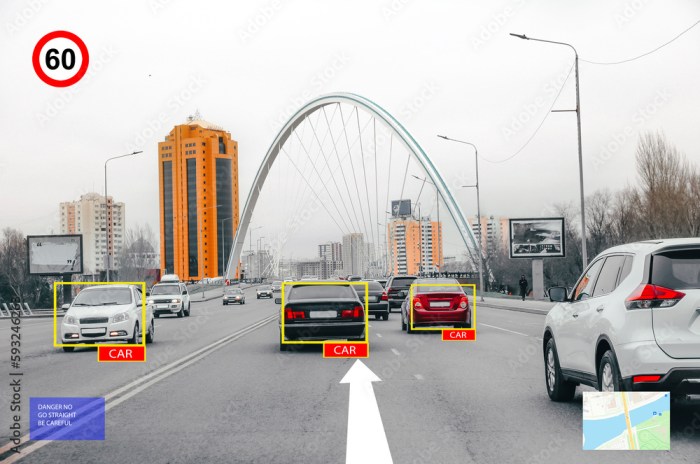
Artificial Intelligence App for Identifying Cars A Comprehensive Overview
Artificial intelligence app for identifying cars represents a convergence of computer vision, machine learning, and mobile technology, offering a novel approach to vehicle recognition. This technology, fueled by advancements in deep learning, allows for the automatic identification of car makes, models, and sometimes even specific trim levels, based on image analysis. This capability has implications across numerous sectors, from automotive sales and insurance to law enforcement and consumer applications, presenting both exciting possibilities and complex challenges.
This document will delve into the core functionalities, applications, technical architecture, accuracy, user experience, data privacy, future trends, market dynamics, and ethical considerations surrounding these AI-powered applications. The exploration will encompass the underlying algorithms, data acquisition processes, user interface design, and the ethical implications of deploying such technology in various real-world scenarios. The objective is to provide a detailed and analytical understanding of the current state and future potential of artificial intelligence in car identification.
Exploring the core functionalities of an artificial intelligence application for identifying cars necessitates a detailed examination of its operational principles.
The ability of an AI application to accurately identify car makes and models hinges on sophisticated image recognition technology. This technology, powered by machine learning algorithms, allows the application to analyze visual data, extract relevant features, and compare them against a database of known car models. The following sections will delve into the specific mechanisms and processes that enable this capability.
Image Recognition and Model Identification
The core of the car identification application relies on a Convolutional Neural Network (CNN). CNNs are particularly well-suited for image analysis due to their ability to automatically learn hierarchical features from images. These features range from basic edges and corners in the initial layers to more complex patterns and shapes in deeper layers, eventually representing the overall structure of a car.The process begins with the input image being fed into the CNN.
The CNN consists of multiple layers, including convolutional layers, pooling layers, and fully connected layers. Convolutional layers apply filters to the image to detect specific features. Pooling layers reduce the dimensionality of the feature maps, making the model more computationally efficient and robust to variations in image size and orientation. The fully connected layers then use the extracted features to classify the car.The application uses a pre-trained CNN, such as a ResNet or Inception model, which has been previously trained on a vast dataset of images.
Fine-tuning is then performed on a dataset of car images to specialize the model for car identification. The final fully connected layer of the CNN outputs a probability distribution over the possible car makes and models. The model predicts the car’s identity by selecting the class with the highest probability.The algorithm employs several techniques to enhance accuracy. One such technique is the use of transfer learning.
This involves starting with a model trained on a large, general image dataset (like ImageNet) and then fine-tuning it on a dataset of car images. This approach significantly reduces the amount of training data required and accelerates the learning process. Additionally, techniques such as data augmentation are applied to increase the diversity of the training data and improve the model’s ability to generalize to unseen images.
The application can also incorporate ensemble methods, where multiple CNN models are trained and their predictions are combined to improve overall accuracy.
Data Acquisition and Preprocessing for Training
The performance of a car identification AI application is directly proportional to the quality and quantity of the training data. The data acquisition and preprocessing steps are crucial for ensuring the model’s accuracy and reliability.The data acquisition process involves gathering a large dataset of car images. This dataset includes images of various car makes and models, captured from different angles, under varying lighting conditions, and in diverse environments.
Sources for this data can include online image databases, publicly available datasets, and custom-collected images. It is important to have a dataset that reflects the real-world variability to make the application robust.The images are then labeled, a process that involves assigning the correct make and model to each image. This labeling process requires human annotation and is often performed by experts or through crowdsourcing platforms.
Each image is meticulously labeled to create a ground truth dataset, serving as the basis for training the AI model.Data preprocessing is a crucial step that prepares the images for training. This involves several techniques, including:
- Resizing: Images are resized to a uniform size to ensure consistent input to the CNN.
- Normalization: Pixel values are normalized to a specific range, typically between 0 and 1, to improve the training stability and performance.
- Data Augmentation: Data augmentation techniques are applied to increase the diversity of the training data. This involves generating new images from the existing ones by applying transformations such as:
- Rotation: Rotating the image by a certain degree.
- Flipping: Horizontally or vertically flipping the image.
- Scaling: Zooming in or out on the image.
- Color Adjustments: Changing the brightness, contrast, and saturation of the image.
These data augmentation techniques help the model generalize better to unseen images and reduce the risk of overfitting, improving the model’s accuracy and robustness.
User Interaction Procedure
The user interaction with the car identification app is designed to be intuitive and user-friendly. The following steps Artikel the typical process:
- Image Capture: The user opens the application and selects the “Identify Car” feature. The application then activates the device’s camera.
- Image Acquisition: The user positions the camera to capture a clear image of the car. The application provides guidance, such as displaying a frame or suggesting an optimal distance, to ensure the image quality.
- Image Processing: Once the image is captured, the application automatically processes it. This includes resizing the image, applying any necessary pre-processing steps, and feeding it into the trained CNN model.
- Model Inference: The CNN model analyzes the image and generates a probability distribution for each possible car make and model.
- Result Display: The application displays the identified car make and model to the user, along with the confidence level (e.g., “95% certain: Honda Civic”). It may also provide additional information, such as the year of manufacture or related details, if available.
- Additional Features: Some applications might offer additional features such as a search function to find related information about the car or links to online resources.
Unveiling the diverse applications of an artificial intelligence app for car identification reveals its utility across various sectors.
The ability to rapidly and accurately identify vehicles using artificial intelligence (AI) presents a transformative shift across numerous industries. This technology, fueled by advancements in computer vision and machine learning, offers unprecedented capabilities for automation, efficiency gains, and enhanced decision-making processes. Its applications span from streamlining operations in the automotive industry to supporting law enforcement efforts and improving the accuracy of insurance claims.
Automotive Industry Applications
The automotive industry stands to benefit significantly from AI-powered car identification. This technology streamlines processes, improves accuracy, and provides new capabilities.
- Car Dealerships: AI-driven car identification apps can significantly improve operational efficiency. For instance, in inventory management, the apps can instantly identify the make, model, year, and trim level of a vehicle by simply capturing an image of its license plate or exterior. This eliminates the need for manual data entry, reducing errors and saving valuable time. Furthermore, the apps can be integrated with pricing and valuation tools, enabling dealerships to quickly assess the value of trade-in vehicles or provide accurate quotes to potential buyers.
The apps can also be used to automatically populate vehicle listings with accurate specifications, improving the customer experience and reducing the risk of incorrect information.
- Insurance Claims: AI-powered car identification drastically improves the insurance claims process. By analyzing images of damaged vehicles, the apps can quickly identify the specific model and its features, enabling insurers to accurately assess the extent of the damage and estimate repair costs. This accelerates the claims process, reduces fraud, and improves customer satisfaction. The apps can also be integrated with databases containing information on parts prices and repair times, further enhancing the accuracy of cost estimations.
For example, if an image shows damage to a specific headlight, the app can identify the exact headlight model and provide an estimated cost for replacement based on real-time market data.
- Vehicle Diagnostics: AI-based car identification combined with diagnostic tools enables advanced vehicle diagnostics. By identifying the vehicle’s make and model, the app can access specific diagnostic information, such as trouble codes and repair manuals. This assists mechanics in quickly identifying and resolving mechanical issues. Moreover, the app can analyze images of engine components or other parts to identify potential problems, such as wear and tear, or leaks.
This proactive approach to vehicle maintenance can prevent costly repairs and improve vehicle longevity. For instance, an app could analyze an image of an engine and highlight areas of concern, such as a leaky oil filter, guiding mechanics towards the root cause of potential issues.
Comparative Analysis of Car Identification Apps, Artificial intelligence app for identifying cars
Several car identification apps are currently available, each with its own set of features and benefits. The following table provides a comparative analysis of three prominent examples.
| App Name | Key Features | Unique Selling Points |
|---|---|---|
| Example App A (Hypothetical) | License plate recognition, VIN decoding, Vehicle specification retrieval, Damage assessment. | Fastest processing speed; integration with a large database of vehicle specifications; user-friendly interface. |
| Example App B (Hypothetical) | License plate recognition, Make/Model identification, Aftermarket part identification, integration with repair databases. | Focus on aftermarket parts identification; detailed repair guides; extensive vehicle database. |
| Example App C (Hypothetical) | Real-time vehicle tracking (with consent), Driver behavior analysis, Integration with smart city infrastructure. | Focus on advanced features such as real-time vehicle tracking (with consent) and driver behavior analysis; Integration with smart city infrastructure, offering traffic insights and parking assistance. |
Law Enforcement Applications and Ethical Considerations
Law enforcement agencies can leverage AI-powered car identification for various purposes, including vehicle tracking and investigation.
- Vehicle Tracking: The apps can be integrated with cameras at various locations, such as highways and intersections, to automatically scan license plates and identify vehicles of interest. This enables law enforcement to track stolen vehicles, identify vehicles involved in criminal activities, and enforce traffic laws.
- Investigation: By analyzing images and videos, the apps can help identify vehicles involved in crimes, providing crucial leads for investigators. For example, the app could analyze security camera footage to identify the make and model of a getaway car or track the movement of a vehicle suspected of illegal activities.
However, the use of AI in law enforcement also raises several ethical considerations:
- Privacy: The collection and storage of vehicle data, including location and movement, raise privacy concerns. Strict regulations and transparency are crucial to protect citizens’ rights.
- Bias: The AI algorithms could be biased, leading to disproportionate targeting of certain groups or neighborhoods. Regular audits and ongoing training are necessary to mitigate bias.
- Transparency: The public needs to be informed about how the technology is used and how data is collected and stored. Transparency is essential to build trust and ensure accountability.
- Misuse: The technology could be misused for surveillance or other purposes that violate civil liberties. Strong safeguards and oversight mechanisms are necessary to prevent misuse.
Investigating the technical architecture underpinning an artificial intelligence car identification application exposes its complex design.

The creation of an AI-powered car identification application involves a sophisticated technical architecture. This architecture encompasses various components, from the programming languages and frameworks used in development to the cloud infrastructure that supports the application’s operational needs. Understanding these elements is crucial for appreciating the application’s functionality and scalability.
Programming Languages and Frameworks
The development of AI-driven car identification applications relies heavily on specific programming languages and frameworks. These tools enable the creation, training, and deployment of machine learning models capable of identifying cars with accuracy.
- Python: Python is the dominant language due to its versatility and extensive libraries. Its readability and large community support are significant advantages.
- TensorFlow and PyTorch: These are the leading deep learning frameworks used for building and training the convolutional neural networks (CNNs) that are essential for image recognition tasks. These frameworks provide tools for model definition, optimization, and deployment.
- TensorFlow: Developed by Google, it offers a comprehensive ecosystem for machine learning, including tools for deployment on various platforms.
- PyTorch: Developed by Facebook’s AI Research lab, it is known for its flexibility and ease of use, particularly in research settings.
- OpenCV: The Open Source Computer Vision Library is crucial for image processing tasks, such as feature extraction and image manipulation, which are critical for preprocessing images before feeding them into the AI models.
- Keras: This high-level neural networks API, running on top of TensorFlow, allows for rapid prototyping and model building, simplifying the development process.
Cloud Infrastructure and Server-Side Components
Supporting the functionality of a car identification application requires a robust cloud infrastructure and server-side components. This includes databases for data storage, APIs for integration, and scalable computing resources for handling image processing and model inference.
- Cloud Platforms: Services such as Amazon Web Services (AWS), Google Cloud Platform (GCP), and Microsoft Azure provide the necessary infrastructure. These platforms offer scalable compute resources, storage, and machine learning services.
- Database Management: Databases are crucial for storing car images, metadata (make, model, year), and user data. Popular choices include:
- Relational Databases (e.g., PostgreSQL, MySQL): Used for structured data storage, especially metadata.
- NoSQL Databases (e.g., MongoDB, Cassandra): Ideal for storing unstructured data, such as images and large datasets.
- API Integrations: APIs are essential for connecting the application’s different components and integrating with external services. For example:
- Image Storage APIs (e.g., AWS S3, Google Cloud Storage): Used for storing and retrieving car images.
- Payment Gateway APIs: If the application has paid features, these APIs handle payment processing.
- Server-Side Components: These components handle the application’s logic, including:
- API Gateway: Manages incoming requests, authentication, and routing to the appropriate services.
- Model Inference Servers: Run the trained AI models to identify cars from input images. These servers often use frameworks like TensorFlow Serving or TorchServe for efficient model deployment.
- Background Processing Services: Handle tasks such as image preprocessing, data analysis, and model retraining.
Application Architecture
The application architecture is a layered design, integrating front-end, back-end, and cloud services. The front-end, accessible via a web or mobile interface, allows users to upload images. The back-end, typically written in Python using frameworks like Django or Flask, handles API requests, user authentication, and interacts with cloud services. The core functionality, car identification, resides within the back-end. When a user uploads an image, the back-end processes it by invoking pre-processing steps, and then passes it to a trained CNN model, often hosted on a cloud platform like AWS SageMaker or Google Cloud AI Platform. The model analyzes the image, identifies the car, and returns the results. These results, including the make, model, and year, are then presented to the user through the front-end. The system also interacts with cloud storage for image storage and databases for data management. This architecture facilitates scalability and allows for efficient handling of image processing and machine learning tasks.
Assessing the accuracy and limitations of an artificial intelligence app for car identification demands a thorough evaluation.
The efficacy of an artificial intelligence (AI) application designed for car identification is critically dependent on its accuracy and the ability to operate effectively across a range of conditions. Evaluating this necessitates a multifaceted approach, considering both quantitative metrics and qualitative observations. Understanding the performance limitations of such an application is equally crucial for its practical deployment and continuous improvement.
Measuring the Accuracy of Car Identification
To quantify the performance of an AI car identification app, several key metrics are employed. These metrics provide a comprehensive understanding of the app’s strengths and weaknesses.Precision, recall, and F1-score are the fundamental metrics used to evaluate the accuracy of the car identification app.
- Precision: Precision measures the proportion of correctly identified car models out of all the cars the app identified as a specific model. It answers the question: “Of all the cars the app
-said* were a certain model, how many actually
-were* that model?” A high precision indicates a low rate of false positives.Precision = True Positives / (True Positives + False Positives)
For example, if the app identifies 100 cars as a Honda Civic, and 90 of them are actually Civics, the precision is 90%.
- Recall: Recall, also known as sensitivity, measures the proportion of correctly identified car models out of all the actual cars of that model present in the dataset. It answers the question: “Of all the cars that
-were* a certain model, how many did the app correctly identify?” A high recall indicates a low rate of false negatives.Recall = True Positives / (True Positives + False Negatives)
For example, if there are 100 Honda Civics in the dataset, and the app correctly identifies 80 of them, the recall is 80%.
- F1-score: The F1-score is the harmonic mean of precision and recall. It provides a single metric that balances both precision and recall. It is particularly useful when the dataset has an uneven distribution of car models.
F1-score = 2
– (Precision
– Recall) / (Precision + Recall)For example, if a car identification app has a precision of 90% and a recall of 80%, the F1-score would be approximately 84.7%.
Several factors significantly affect the performance of a car identification app. These include image quality, lighting conditions, the angle of the image, the presence of obstructions, and the diversity of the training data. For example, a car identification app trained primarily on high-resolution, well-lit images of new car models will likely perform poorly on low-resolution, poorly lit images of older models, or images taken at extreme angles.
The performance also hinges on the diversity of the training data. If the training dataset lacks examples of a specific car model or its variations (e.g., different trims, model years), the app will likely misidentify that model.
Potential Limitations of the App
Car identification applications face several limitations that can hinder their accuracy. Addressing these limitations is crucial for improving their reliability and practical applicability.
- Image Quality: Low-resolution images, blurred images, or images with significant noise can significantly impair the app’s ability to extract relevant features for identification.
- Mitigation: Implementing image pre-processing techniques, such as noise reduction filters and super-resolution algorithms, can enhance image quality. Furthermore, the app can be designed to automatically reject images below a certain quality threshold, prompting the user to retake the picture.
- Lighting Conditions: Harsh sunlight, shadows, or insufficient lighting can distort the appearance of the car, making it difficult for the app to accurately identify it.
- Mitigation: Training the AI model on a dataset that includes images captured under various lighting conditions can improve its robustness. Adaptive exposure control within the app can also help to optimize image capture in different lighting scenarios.
The app can also provide guidance to the user on optimal image capture techniques (e.g., avoiding direct sunlight).
- Mitigation: Training the AI model on a dataset that includes images captured under various lighting conditions can improve its robustness. Adaptive exposure control within the app can also help to optimize image capture in different lighting scenarios.
- Obstructions: Objects partially obscuring the car, such as trees, other vehicles, or buildings, can prevent the app from accurately identifying the car.
- Mitigation: Employing object detection and segmentation techniques to identify and remove or mitigate the impact of obstructions. The app could also suggest alternative viewpoints or prompt the user to capture multiple images from different angles to provide a more complete view of the car.
Scenarios of Misidentification
Understanding the scenarios where the app might misidentify a car is crucial for its continuous improvement.
- Similar Models: The app might misidentify a car due to the similarity between different car models, especially when the image quality is not optimal. For example, the app might confuse a Honda Civic with an Acura Integra, especially if the images are taken from a similar angle.
- Reason: Similar body styles, headlight designs, and overall silhouettes.
- Improvement: Increase the training data diversity with more specific images that differentiate these models and refine the feature extraction algorithms to focus on subtle differences (e.g., grille design, taillight shape).
- Model Year Variations: The app might misidentify a car due to variations in the model across different years. For example, a 2010 Ford Focus might be misidentified as a 2012 model.
- Reason: Minor design changes between model years can confuse the app, especially if the training data is biased towards certain model years.
- Improvement: Expand the training dataset to include a comprehensive range of model years for each car model and refine the algorithms to focus on details that change between model years.
- Aftermarket Modifications: Cars with aftermarket modifications (e.g., custom bumpers, spoilers, or paint jobs) can be misidentified.
- Reason: The app’s training data may not include examples of modified cars.
- Improvement: Include a broader range of modified cars in the training data, focusing on recognizing the original model and then identifying the modifications as a separate layer of analysis.
Analyzing the user experience and interface design of an artificial intelligence car identification application uncovers the importance of usability.
The usability of an artificial intelligence (AI) car identification application is paramount to its success, influencing user adoption, satisfaction, and the overall effectiveness of the system. A well-designed interface streamlines the user’s interaction with the AI, minimizing cognitive load and maximizing the efficiency of the car identification process. This section delves into the key elements that contribute to a user-friendly interface, presents a mock-up of a mobile application, and suggests improvements based on potential user feedback.
Key Elements of a User-Friendly Interface
A user-friendly interface is characterized by several core elements that contribute to a positive user experience. These elements work in concert to ensure that the application is easy to understand, navigate, and use effectively.* Intuitive Navigation: The application’s navigation should be logical and straightforward, allowing users to easily find the features they need. This includes a clear menu structure, consistent placement of navigation elements, and the use of familiar interaction patterns.* Clear Visual Cues: Visual cues, such as icons, color-coding, and typography, are crucial for guiding the user and providing feedback.
The design should utilize visual elements to highlight important information, indicate the status of the application, and provide clear instructions. For instance, a loading animation should clearly indicate that the system is processing information.* Accessible Information Display: Information should be presented in a clear, concise, and easily digestible format. This includes the use of appropriate font sizes, sufficient contrast, and well-organized layouts.
The display should prioritize the most relevant information, minimizing clutter and avoiding overwhelming the user.* Responsiveness and Feedback: The application should provide immediate feedback to user actions, such as taps or swipes. This can be achieved through animations, visual changes, or text updates. The application should also be responsive, adapting to different screen sizes and orientations to ensure a consistent experience across various devices.* Error Handling and Guidance: The interface should provide clear and helpful error messages if something goes wrong.
It should guide the user on how to resolve the issue and prevent future errors. For example, if the camera fails to focus, a message should guide the user on how to improve the image capture.
Mock-up of the Application’s User Interface
This mock-up showcases a mobile application designed for car identification. The design prioritizes ease of use, visual clarity, and a streamlined workflow. Screen 1: Home Screen* Description: The home screen features a prominent “Scan Car” button at the center of the screen. Below this button are options for accessing the user’s history, settings, and help documentation. The top of the screen displays the application’s logo and name.
User Interaction
Tapping the “Scan Car” button activates the camera.
(Image Description
A mobile screen with a clean, minimalist design. The top of the screen displays the application’s logo and name. A large, circular button labeled “Scan Car” dominates the center. Below this, there are smaller buttons labeled “History,” “Settings,” and “Help.”)* Screen 2: Scanning View* Description: The camera view is active. The application provides a live feed from the camera, with a rectangular frame overlaid on the view, indicating the area for car detection.
Instructions appear at the top, prompting the user to align the car within the frame. A progress indicator is shown while the image is processed.
User Interaction
The user points the camera at the car, ensuring it’s within the frame. The application automatically captures an image when the car is detected and the image is in focus, or the user can tap a “Capture” button.
(Image Description
The screen shows a live camera feed. A rectangular frame is visible, indicating the detection area. Text at the top instructs the user to position the car. A circular loading animation appears in the center while processing.)* Screen 3: Results Screen* Description: The screen displays the identified car’s make, model, year, and any other relevant information (e.g., trim level, color).
A high-resolution image of the car is displayed alongside the information. Options to share the information or view more details are available.
User Interaction
The user can view the identified car details. Tapping “Share” opens sharing options (e.g., social media). Tapping “More Details” leads to an expanded view with additional information.
(Image Description
The screen shows a large image of the identified car. Below the image, the make, model, and year are displayed prominently. Buttons for “Share” and “More Details” are present.)* Screen 4: History Screen* Description: This screen displays a list of previously scanned cars, with each entry showing a thumbnail image, the make and model, and the date and time of the scan.
Users can tap on an entry to view the full details.
User Interaction
Users can scroll through their scan history. Tapping on an entry in the list displays the details screen (Screen 3) for that specific scan.
(Image Description
A list of scan results. Each result includes a thumbnail image, the car’s make and model, and the date and time of the scan.)*
Potential User Feedback and Suggested Improvements
User feedback is critical for refining the application and improving its overall user experience.* Feedback Point 1: Slow Processing Time: Users might report that the car identification process is too slow.
Improvement
Optimize the AI model for faster processing. Implement a progress bar or animation to indicate the processing status and manage user expectations.
Feedback Point 2
Inaccurate Identification: Users might find that the application frequently misidentifies cars.
Improvement
Improve the AI model’s accuracy through continuous training with a larger and more diverse dataset of car images. Implement a feedback mechanism allowing users to correct incorrect identifications.
Feedback Point 3
Poor Camera Integration: Users might struggle to use the camera interface, particularly in low-light conditions.
Improvement
Enhance camera controls, including auto-focus and flash settings. Provide clear on-screen instructions and guidance. Incorporate a manual focus option.
Feedback Point 4
Lack of Detailed Information: Users may desire more comprehensive information about the identified cars.
Improvement
Integrate additional data sources to provide more detailed information, such as trim levels, engine specifications, and historical pricing data.
Feedback Point 5
Confusing Navigation: Some users might find the navigation within the app confusing.
Improvement
Simplify the navigation structure. Ensure clear labeling of all buttons and menu items. Conduct user testing to identify and address any usability issues.
Exploring the data privacy and security aspects associated with an artificial intelligence car identification app is essential for responsible development.: Artificial Intelligence App For Identifying Cars
The development and deployment of an AI-powered car identification application necessitate a rigorous approach to data privacy and security. The sensitive nature of the data collected, processed, and stored demands robust safeguards to protect user information from unauthorized access, misuse, or breaches. This section details the data types collected, storage mechanisms, security measures, and privacy policy considerations critical for building user trust and complying with relevant regulations.
Data Collection and Storage Practices
The car identification app collects various types of data to facilitate its core functionalities. Understanding the data collected, how it is stored, and the security measures applied is paramount for user privacy.The application collects the following data types:
- Image Data: The primary data source is the images or video streams of vehicles captured by the user’s device camera. These images are processed by the AI model to identify car make, model, year, and potentially license plate information.
- User Account Information: This includes data provided during account creation, such as email address, username, and password. This information is necessary for user authentication and account management.
- Location Data (Optional): If the user grants location access, the app may collect GPS coordinates to provide location-based features, such as identifying nearby car dealerships or displaying parking information.
- Usage Data: The app tracks user interactions, including the frequency of use, features accessed, and error reports. This data helps improve the app’s performance and user experience.
Data storage practices are crucial for maintaining data integrity and security. The app employs the following storage mechanisms:
- Secure Cloud Storage: Image and user data are stored on secure cloud servers, utilizing encryption both in transit (e.g., using TLS/SSL) and at rest (e.g., AES-256 encryption). Cloud providers typically offer robust security features, including intrusion detection systems, regular security audits, and physical security measures.
- Database Management: User account information and usage data are stored in a relational database, protected by strong password policies, access controls, and regular backups.
- Data Minimization: The app adheres to the principle of data minimization, collecting only the necessary data for its functionality. Unnecessary data is not collected or stored.
- Data Retention Policies: Clear data retention policies are established to determine how long data is stored. User data is retained only as long as necessary for the purpose for which it was collected or as required by law.
Security Measures and Regulatory Compliance
Implementing robust security measures is critical to protect user data from potential threats. Furthermore, compliance with relevant regulations ensures the app operates within legal boundaries and maintains user trust.The app implements the following security measures:
- Encryption: All data, both in transit and at rest, is encrypted using industry-standard encryption protocols. This prevents unauthorized access to data even if intercepted.
- Access Controls: Strict access controls are implemented to limit access to user data. Only authorized personnel have access to specific data, and access is granted based on the principle of least privilege.
- Authentication and Authorization: Strong authentication mechanisms, such as multi-factor authentication (MFA), are used to verify user identities. Authorization controls are in place to ensure users can only access data and features they are permitted to use.
- Regular Security Audits: Regular security audits and penetration testing are conducted to identify and address potential vulnerabilities in the app’s security infrastructure.
- Vulnerability Scanning: Automated vulnerability scanning tools are used to identify and remediate security flaws in the app’s code and infrastructure.
- Incident Response Plan: An incident response plan is established to address data breaches or security incidents promptly. This plan includes steps for identifying, containing, eradicating, recovering from, and learning from incidents.
- Secure Coding Practices: Secure coding practices are followed throughout the development lifecycle to prevent vulnerabilities such as cross-site scripting (XSS) and SQL injection.
The app complies with the following relevant regulations:
- General Data Protection Regulation (GDPR): If the app has users in the European Union (EU), it complies with GDPR, which requires obtaining user consent for data collection, providing users with the right to access, rectify, and erase their data, and implementing robust data security measures.
- California Consumer Privacy Act (CCPA): If the app has users in California, it complies with CCPA, which grants California consumers rights regarding their personal information, including the right to know what personal information is collected, the right to delete personal information, and the right to opt-out of the sale of personal information.
- Children’s Online Privacy Protection Act (COPPA): If the app is designed for children under 13, it complies with COPPA, which requires obtaining verifiable parental consent before collecting, using, or disclosing personal information from children.
Potential Vulnerabilities and Mitigation Strategies
Identifying and addressing potential vulnerabilities is critical to preventing data breaches and unauthorized access.Potential vulnerabilities include:
- SQL Injection: If the app uses a database, SQL injection vulnerabilities could allow attackers to gain unauthorized access to user data.
- Cross-Site Scripting (XSS): XSS vulnerabilities could allow attackers to inject malicious scripts into the app, potentially stealing user credentials or compromising user accounts.
- Insecure API Endpoints: Insecure API endpoints could expose sensitive data to unauthorized access.
- Weak Password Policies: Weak password policies could make user accounts vulnerable to brute-force attacks.
- Third-Party Library Vulnerabilities: Using outdated or vulnerable third-party libraries could introduce security risks.
Mitigation strategies include:
- Input Validation and Sanitization: Implementing robust input validation and sanitization techniques to prevent SQL injection and XSS vulnerabilities.
- Regular Security Audits and Penetration Testing: Conducting regular security audits and penetration testing to identify and address vulnerabilities.
- Secure API Design: Designing API endpoints securely, using authentication and authorization mechanisms, and implementing rate limiting to prevent abuse.
- Strong Password Policies and MFA: Enforcing strong password policies and implementing multi-factor authentication (MFA) to protect user accounts.
- Regular Library Updates: Regularly updating third-party libraries to patch security vulnerabilities.
- Web Application Firewall (WAF): Deploying a Web Application Firewall (WAF) to filter malicious traffic and protect against common web attacks.
Privacy Policy and User Rights
A comprehensive privacy policy is essential to inform users about data collection practices, user rights, and data control mechanisms.The app’s privacy policy will include the following:
- Data Collection: A clear description of the types of data collected, including image data, user account information, location data (if applicable), and usage data.
- Data Usage: Explanation of how the collected data is used, such as identifying vehicles, improving the app’s performance, and providing personalized features.
- Data Sharing: Information about whether and with whom the data is shared, such as third-party service providers (e.g., cloud storage providers) or law enforcement agencies (if required by law).
- Data Retention: Details about how long the data is retained and the criteria for determining the retention period.
- User Rights: A clear statement of user rights, including:
- Right to Access: Users have the right to access their personal data.
- Right to Rectification: Users have the right to correct inaccurate or incomplete data.
- Right to Erasure (Right to be Forgotten): Users have the right to request the deletion of their personal data.
- Right to Restriction of Processing: Users have the right to restrict the processing of their data.
- Right to Data Portability: Users have the right to receive their data in a portable format.
- Right to Object: Users have the right to object to the processing of their data.
- Data Security: Description of the security measures implemented to protect user data, including encryption, access controls, and regular security audits.
- Contact Information: Contact information for the app’s data protection officer or privacy team, allowing users to contact them with privacy-related inquiries or concerns.
- Policy Updates: Information about how the privacy policy will be updated and how users will be notified of changes.
User control mechanisms include:
- Account Settings: Users can access and modify their account settings, including personal information and communication preferences.
- Data Deletion: Users can request the deletion of their data through their account settings or by contacting the privacy team.
- Location Data Control: Users can control location data access through their device settings.
- Privacy Preferences: Users can manage their privacy preferences within the app, such as opting out of personalized advertising.
Delving into the future possibilities and advancements in artificial intelligence car identification technology reveals its evolving potential.
The trajectory of artificial intelligence (AI) in car identification is one of continuous evolution, driven by advancements in machine learning, computer vision, and augmented reality. The potential for future improvements lies in enhancing accuracy, speed, and feature sets, ultimately leading to more sophisticated and user-friendly applications. This section explores the emerging trends, potential functionalities, and the impact of augmented reality on car identification technology.
Emerging Trends in AI and Machine Learning for Car Identification
The future of car identification apps hinges on the continuous development of AI and machine learning techniques. Several key areas are driving significant advancements.
- Advancements in Computer Vision: Computer vision algorithms are constantly evolving, leading to improved object detection and recognition capabilities.
- Deep Learning Architectures: Deep learning models, particularly convolutional neural networks (CNNs), are becoming increasingly sophisticated. These networks can analyze images with greater accuracy and speed. For instance, more complex CNN architectures, like those based on the transformer model, originally developed for natural language processing, are now being adapted for computer vision.
These transformer-based models allow for more contextual understanding of the scene, leading to improved car identification accuracy even in challenging conditions such as low light or partial obstruction.
- Real-time Processing: Optimizations in algorithms and hardware, such as the use of specialized processors like GPUs and TPUs, are enabling real-time car identification, which is critical for many applications.
- Deep Learning Architectures: Deep learning models, particularly convolutional neural networks (CNNs), are becoming increasingly sophisticated. These networks can analyze images with greater accuracy and speed. For instance, more complex CNN architectures, like those based on the transformer model, originally developed for natural language processing, are now being adapted for computer vision.
- Enhanced Data Augmentation: The quality and quantity of training data significantly impact model performance.
- Synthetic Data Generation: Techniques for generating synthetic data, which simulate real-world images, are improving. This reduces the reliance on large, labeled datasets and enables the training of models on diverse and challenging scenarios.
- Data Augmentation Techniques: Advanced data augmentation methods, such as adding noise, changing perspectives, and modifying lighting conditions, help improve model robustness and generalization.
- Federated Learning: Federated learning allows models to be trained across multiple devices without sharing the raw data.
- Privacy Preservation: This approach enhances data privacy and security, as user data remains on their devices. This is particularly important for car identification apps that handle sensitive information.
- Model Personalization: Federated learning can lead to more personalized models, as the models can be trained on data from specific user environments, improving accuracy in those contexts.
Potential New Features and Functionalities
The future of car identification apps could include a range of innovative features that extend their utility.
- Advanced Vehicle Diagnostics:
- Predictive Maintenance: Integration with vehicle data could allow the app to predict potential maintenance needs based on car model, driving behavior, and observed vehicle characteristics.
- Fault Detection: The app could identify specific vehicle faults, such as brake light failures or tire pressure issues, by analyzing visual data.
- Enhanced Safety Features:
- Driver Assistance Integration: The app could integrate with existing driver-assistance systems to provide real-time information about nearby vehicles and potential hazards.
- Accident Reconstruction: By analyzing images and video data, the app could assist in accident reconstruction by identifying vehicle models and their positions.
- Advanced Vehicle Customization:
- Virtual Car Modifications: The app could allow users to virtually modify their cars, visualizing different paint colors, wheel styles, and body kits.
- Part Identification: The app could identify specific car parts and provide information about their availability and compatibility.
The Impact of Augmented Reality (AR) on Car Identification Apps
Augmented reality offers a transformative potential for car identification apps, enhancing the user experience and providing additional value.
- Interactive Overlays: AR can overlay digital information onto the real-world view of a car.
- Model Identification: When a user points their device at a car, AR can overlay the car’s make, model, and year directly onto the image.
- Feature Highlighting: The app can highlight specific features, such as the location of sensors, the type of headlights, or the presence of advanced driver-assistance systems.
- Enhanced User Interface: AR can create a more intuitive and engaging user interface.
- 3D Models: The app can overlay 3D models of cars onto the real world, allowing users to view the car from different angles and interact with it virtually.
- Interactive Tutorials: AR can provide interactive tutorials on how to use car features or perform maintenance tasks.
- Integration with Other Services: AR can integrate with other services to provide a more comprehensive experience.
- Insurance and Warranty Information: AR can provide quick access to car insurance and warranty details by overlaying this information on the car.
- Shopping Integration: The app can provide links to online stores where users can purchase parts or accessories for their car.
Evaluating the market competition and monetization strategies for an artificial intelligence app for car identification reveals the business landscape.
The competitive landscape for car identification apps is dynamic, influenced by technological advancements, user demand, and the monetization strategies employed by developers. Understanding these aspects is crucial for success in this market. The business models adopted by developers vary significantly, impacting their revenue streams and overall market positioning.
Comparing Business Models
Several business models are employed by car identification app developers, each with its own advantages and disadvantages. These models influence user experience and revenue generation.
- Freemium Model: This model offers a basic version of the app for free, with limited features. Premium features, such as more detailed car information, unlimited scans, or the removal of advertisements, are available through in-app purchases. This approach attracts a large user base initially, providing opportunities for conversion to paid users. The success of the freemium model hinges on offering enough value in the free version to attract users while providing compelling reasons to upgrade.
- Subscription Model: Subscription models provide access to all app features for a recurring fee, typically monthly or annually. This model offers a predictable revenue stream for developers and encourages long-term user engagement. Subscription tiers may be offered to cater to different user needs, such as a basic tier with limited features and a premium tier with advanced functionalities like VIN decoding and historical data access.
The value proposition of the subscription must justify the recurring cost.
- In-App Advertising Model: This model generates revenue by displaying advertisements within the app. While it can provide a revenue stream without directly charging users, it can also negatively impact the user experience if ads are intrusive or frequent. Developers must balance ad placement with user satisfaction to avoid driving users away. The revenue generated depends on factors like ad impressions, click-through rates, and the type of ads displayed.
SWOT Analysis for a Hypothetical Car Identification App
A SWOT analysis provides a framework for evaluating the strengths, weaknesses, opportunities, and threats associated with a car identification app.
| Strengths |
|
|---|---|
| Weaknesses |
|
| Opportunities |
|
| Threats |
|
Effective Marketing Strategies
Effective marketing is essential for reaching a wider audience and driving app downloads. Various strategies can be employed to promote a car identification app.
- Search Engine Optimization (): Optimize app store listings and website content with relevant s to improve visibility in search results. This ensures that the app appears higher in search rankings when potential users search for car identification apps.
- Social Media Marketing: Utilize social media platforms to showcase the app’s features, engage with users, and run targeted advertising campaigns. This can include creating engaging content, such as videos demonstrating the app’s functionality, and running contests to increase user engagement.
- Content Marketing: Create informative blog posts, articles, and videos about car identification, car maintenance, and related topics to attract potential users and establish the app as a valuable resource. For instance, a blog post detailing how to identify a car’s model year using the app can drive organic traffic.
- Influencer Marketing: Partner with automotive influencers and reviewers to promote the app to their followers. Reviews and demonstrations by trusted figures in the automotive community can significantly increase credibility and drive downloads.
- App Store Optimization (ASO): Optimize the app’s title, description, s, and screenshots in the app stores to improve its visibility and conversion rates. This includes regularly updating the app store listing based on user feedback and performance data.
Understanding the ethical implications of using artificial intelligence for car identification applications requires careful consideration.
The deployment of artificial intelligence (AI) for car identification presents significant ethical challenges that demand meticulous scrutiny. While the technology promises numerous benefits, including enhanced security and improved traffic management, its implementation necessitates a comprehensive evaluation of potential harms. This examination must encompass algorithmic biases, the risks of misuse, and the impact on individual privacy and civil liberties. Addressing these ethical concerns is paramount to ensure responsible development and deployment, fostering public trust and mitigating potential negative consequences.
Potential Biases in Algorithms
Algorithmic bias represents a critical ethical concern within AI-driven car identification systems. These biases can arise from various sources, including the training data used to develop the AI models. If the training data disproportionately reflects certain demographics or vehicle types, the resulting AI system may exhibit biased performance.The following points detail the sources and consequences of algorithmic bias:
- Data Imbalance: If the training dataset contains an unequal representation of different car makes, models, or colors, the AI model may perform less accurately on underrepresented categories. For instance, an AI trained primarily on images of luxury vehicles might struggle to accurately identify older, less common models.
- Geographic Bias: Training data collected from specific geographic locations can introduce bias. An AI trained predominantly on images from North America might misidentify vehicles in Europe or Asia due to differences in license plate styles, vehicle designs, and road conditions.
- Demographic Bias: If the data includes images of individuals, bias can arise if the dataset does not fairly represent different ethnic groups, genders, or age ranges. This could lead to discriminatory outcomes, particularly if the AI is used in law enforcement applications.
- Consequences of Bias: Biased AI can lead to misidentification, incorrect actions, and discriminatory outcomes. For example, a biased system might falsely accuse individuals of crimes or unfairly target certain communities for surveillance.
Addressing these biases requires careful data curation, bias detection techniques, and continuous model monitoring.
Risk of Misuse
The potential for misuse constitutes a significant ethical concern. Car identification technology could be exploited for malicious purposes, leading to serious consequences.Consider the following potential misuse scenarios:
- Surveillance and Tracking: Car identification systems can be used to track individuals’ movements, creating detailed records of their whereabouts. This information could be used for stalking, harassment, or political repression. The aggregation of data from multiple sources (e.g., traffic cameras, license plate readers) can provide a comprehensive picture of an individual’s activities.
- Unwarranted Profiling: Law enforcement agencies could use car identification to profile individuals based on their vehicle type, potentially leading to discriminatory practices. This could result in increased stops, searches, or other forms of harassment.
- Data Breaches and Security Risks: Car identification systems store sensitive data, including vehicle information and potentially personal details. Data breaches could expose this information to unauthorized access, leading to identity theft, financial fraud, and other harms.
- Manipulation and Deception: Criminals could potentially use car identification technology to spoof license plates, disguise stolen vehicles, or impersonate authorized vehicles.
Mitigating the risk of misuse requires implementing robust security measures, establishing clear legal frameworks, and promoting transparency in data collection and usage.
Impact on Privacy and Civil Liberties
The use of AI for car identification poses a substantial threat to individual privacy and civil liberties. The ability to track and monitor vehicles raises concerns about government overreach and the erosion of fundamental rights.The following aspects of privacy and civil liberties are at stake:
- Mass Surveillance: The widespread deployment of car identification systems can create a pervasive surveillance environment, where individuals are constantly monitored. This can chill free speech, assembly, and other protected activities.
- Data Retention and Storage: The indefinite retention of vehicle identification data raises concerns about the potential for abuse. Data could be used for purposes beyond its original intent, or it could be accessed by unauthorized individuals.
- Lack of Transparency: If individuals are not informed about how their data is being collected, used, and stored, they are unable to exercise control over their personal information. This lack of transparency undermines public trust and accountability.
- Chilling Effect: The knowledge that one’s movements are being tracked can have a chilling effect on behavior. Individuals may be less likely to participate in protests, express unpopular opinions, or engage in other activities that could be viewed as controversial.
Protecting privacy and civil liberties requires establishing strong data protection laws, limiting data retention periods, and ensuring transparency in data collection and usage.
Role of Developers and Users
Developers and users share the responsibility for ensuring the ethical and responsible use of AI for car identification. Their actions and decisions have a direct impact on the technology’s societal implications.Here’s how developers and users can contribute to ethical practices:
- Developers’ Responsibilities:
- Data Curation: Developers must carefully curate training data to minimize bias and ensure fairness.
- Transparency: Developers should provide clear information about how the AI system works, including its limitations and potential biases.
- Security: Developers must implement robust security measures to protect data from unauthorized access and misuse.
- Accountability: Developers should be accountable for the ethical implications of their work and should be prepared to address any harms that arise.
- Users’ Responsibilities:
- Informed Consent: Users should be informed about how their data is being collected and used and should have the ability to consent to its collection and use.
- Data Minimization: Users should only collect and retain the data that is necessary for the intended purpose.
- Purpose Limitation: Data should only be used for the purposes for which it was collected.
- Accountability: Users should be held accountable for any misuse of the technology.
Transparency and accountability are essential for building public trust and ensuring that AI is used for the benefit of society.
Code of Conduct
A code of conduct provides a framework for ethical behavior and helps to mitigate potential harms. This code Artikels ethical guidelines for both developers and users.Here’s a sample code of conduct:
- Data Privacy:
- Developers and users must prioritize the protection of individual privacy.
- Data collection should be limited to what is necessary and proportionate to the intended purpose.
- Data must be stored securely and protected from unauthorized access.
- Individuals should have the right to access, correct, and delete their data.
- Bias Mitigation:
- Developers must actively work to identify and mitigate biases in the AI system.
- Training data should be diverse and representative of the population.
- Regular audits should be conducted to assess for bias and fairness.
- Misuse Prevention:
- Developers and users must take steps to prevent the misuse of the technology.
- Access to the technology should be restricted to authorized users.
- Clear guidelines should be established for data usage and sharing.
- Mechanisms should be in place to detect and report misuse.
- Transparency and Accountability:
- Developers and users must be transparent about how the technology works and how data is used.
- Mechanisms should be in place to hold developers and users accountable for their actions.
- Independent audits should be conducted to assess compliance with ethical guidelines.
Closing Notes
In conclusion, the development and deployment of artificial intelligence apps for car identification are poised to reshape multiple industries. While these technologies offer significant advantages in efficiency, accuracy, and accessibility, careful consideration of their limitations, ethical implications, and the need for robust data privacy measures is crucial. As AI continues to evolve, these apps will undoubtedly become more sophisticated, offering even greater utility and impact, provided they are developed and utilized responsibly.
The future of car identification is inextricably linked to the ongoing advancements in artificial intelligence, requiring continuous evaluation and adaptation.
FAQ Resource
How does the app handle variations in image quality, such as poor lighting or blurry images?
The app employs various techniques, including image preprocessing, noise reduction algorithms, and the use of multiple image inputs to compensate for poor image quality. Machine learning models are also trained on datasets that include images with varying lighting conditions and resolutions to improve robustness.
What types of data are used to train the AI models for car identification?
The AI models are trained on extensive datasets of car images, including a wide range of makes, models, years, and angles. These datasets often include images sourced from online databases, manufacturer websites, and even publicly available datasets. Data augmentation techniques are used to increase the size and diversity of the training data.
How is the accuracy of the app measured and improved over time?
Accuracy is measured using metrics like precision, recall, and F1-score, which are calculated based on the number of correctly identified cars, the number of false positives, and the number of false negatives. Continuous monitoring of performance and retraining the models with new data are used to improve accuracy over time.
What security measures are in place to protect user data and prevent unauthorized access?
Security measures include data encryption, secure storage, access controls, and compliance with data privacy regulations. Regular security audits and penetration testing are also conducted to identify and address potential vulnerabilities.