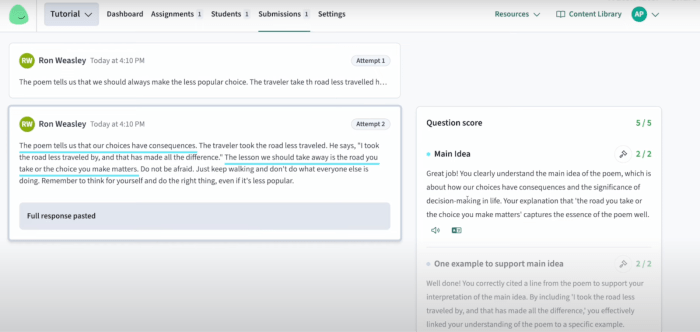
Artificial Intelligence App for Grading Papers An Analytical Overview
Artificial intelligence app for grading papers represents a transformative shift in educational assessment, promising to revolutionize how educators evaluate student work. This technology leverages machine learning to automate the grading process, analyze diverse assignment formats, and provide feedback, fundamentally altering traditional methods. This exploration delves into the core functionalities, technological underpinnings, benefits, and challenges associated with AI-driven grading systems, providing a comprehensive analysis of its impact on teaching and learning.
The subsequent sections will meticulously examine the technical aspects of these applications, the advantages they offer to educators, and the potential pitfalls that must be addressed. Furthermore, we will explore the ethical considerations, privacy implications, and the user experience design that shape the effectiveness and acceptance of these innovative tools. By comparing existing applications, assessing their impact on student learning, and analyzing stakeholder perspectives, this analysis aims to offer a complete understanding of the role of AI in the future of education.
Exploring the core functionality of an AI application designed for evaluating student assignments is essential to understanding its capabilities.
The primary function of an AI grading application is to automate and streamline the evaluation process, providing educators with valuable time savings and consistent feedback. This involves a range of tasks, from initial file parsing and analysis to the generation of grades and feedback. The application’s effectiveness hinges on its ability to accurately assess student work across various assignment types and integrate seamlessly with existing educational infrastructure.
Primary Tasks of an AI Grading Application
An AI grading application should ideally perform several core tasks to effectively evaluate student assignments. These tasks include parsing diverse file formats, analyzing content, and providing feedback. The application must be robust and adaptable to handle the varying complexities of student submissions.* File Format Parsing: The application must support a wide array of file formats, including .docx, .pdf, .txt, and code files (.py, .java, etc.).
It should extract text, images, and other relevant data from these formats efficiently. For example, when encountering a .pdf, the AI must accurately identify and extract text, images, and tables. This parsing process is critical for subsequent analysis.* Content Analysis: This involves several sub-tasks:
Text Analysis
Utilizing Natural Language Processing (NLP) techniques, the AI analyzes the text for grammar, spelling, and stylistic errors. It can also assess the content for relevance to the assignment prompt, understanding the student’s argument, and the use of supporting evidence.
Code Analysis
For code submissions, the AI evaluates the code’s correctness, efficiency, and adherence to coding standards. It can run the code, check for errors, and analyze its structure.
Image Analysis
In cases where assignments include images, the AI can analyze them for content, identifying objects, and assessing the quality of the visual representation.
Feedback Generation
The AI should provide both general and specific feedback. This may include highlighting grammatical errors, suggesting improvements to arguments, and providing comments on code functionality. Feedback should be constructive and aligned with the grading rubric.
Grading and Score Calculation
Based on the analysis, the AI should assign a grade or score. This should be based on a pre-defined rubric or set of criteria. The application should also provide a breakdown of the score, showing how the student performed on different aspects of the assignment.
Integration with LMS
The application should integrate seamlessly with existing Learning Management Systems (LMS) to import assignments, export grades, and provide feedback to students.
Handling Different Question Types
An AI grading application must be versatile enough to handle diverse question types, each requiring a specific evaluation approach. This ensures comprehensive assessment across different subject areas.* Multiple-Choice Questions: The AI can instantly grade multiple-choice questions by comparing the student’s answer to the correct answer key. The application can also provide detailed analytics, such as the percentage of students who selected each option, which can help instructors identify areas of confusion.* Essay Questions: The AI utilizes NLP to evaluate essay responses based on several factors:
Content Relevance
Assessing whether the essay addresses the prompt effectively.
Argumentation
Evaluating the clarity, coherence, and logic of the student’s arguments.
Evidence and Support
Checking for the use of relevant evidence to support claims.
Grammar and Style
Identifying grammatical errors, stylistic issues, and overall writing quality. The AI might compare the student’s response to model answers or use semantic analysis to identify key concepts and arguments.* Code Submissions: The AI can evaluate code submissions through a combination of techniques:
Automated Testing
Running the code against a series of test cases to check for correctness.
Code Analysis
Analyzing the code for efficiency, readability, and adherence to coding standards.
Style Checking
Identifying stylistic errors and suggesting improvements.
Documentation Assessment
Evaluating the quality of the code documentation. For example, the application can use a tool like SonarQube to analyze code quality and identify potential bugs or vulnerabilities.
Integration with Learning Management Systems (LMS)
Seamless integration with Learning Management Systems (LMS) is crucial for the practical application of an AI grading app. This integration facilitates the smooth transfer of assignments, grades, and feedback between the AI application and the LMS.The following table compares different LMS integration methods:
| Integration Method | Description | Benefits | Drawbacks |
|---|---|---|---|
| API Integration | Utilizing the LMS’s Application Programming Interface (API) to directly connect the AI grading app. |
|
|
| LTI (Learning Tools Interoperability) | Using the LTI standard to integrate the AI grading app as a tool within the LMS. |
|
|
| Manual Upload/Download | Manually uploading assignments to the AI app and downloading grades and feedback for import into the LMS. |
|
|
| CSV File Import/Export | Using CSV (Comma-Separated Values) files to transfer data between the AI grading app and the LMS. |
|
|
Unveiling the technological underpinnings that enable an AI grading tool to function properly is very important.
The efficacy of an AI grading tool hinges on a complex interplay of machine learning algorithms, meticulously curated training data, and a well-defined workflow. Understanding these components is crucial to appreciating the capabilities and limitations of automated assessment systems. This section delves into the technical aspects that underpin these AI-powered grading tools.
Machine Learning Algorithms for Automated Grading
Several machine learning algorithms are commonly employed in automated grading systems, each possessing distinct strengths and weaknesses. These algorithms are selected based on the nature of the assignments and the desired level of assessment.
- Natural Language Processing (NLP) Techniques: NLP is fundamental to understanding and analyzing textual content. Algorithms like recurrent neural networks (RNNs), particularly Long Short-Term Memory (LSTM) networks, are adept at processing sequential data, making them suitable for evaluating essays and written responses.
LSTM networks excel at capturing contextual information and long-range dependencies within text.
However, their complexity can make them computationally expensive and require substantial training data.
- Supervised Learning with Regression and Classification: Supervised learning algorithms are often used to predict grades or classify responses based on features extracted from the text. Support Vector Machines (SVMs) and decision trees are examples. SVMs can be effective in high-dimensional feature spaces, while decision trees offer interpretability, allowing users to understand the reasoning behind a grade. A major weakness is that they require labeled data, and the performance is highly dependent on the quality and quantity of the training dataset.
- Transformer Models: More recently, transformer models, such as BERT (Bidirectional Encoder Representations from Transformers) and its variants, have gained prominence. These models excel at capturing contextual nuances and relationships within text due to their attention mechanisms.
BERT’s architecture allows it to understand the context of words in a sentence by considering both left and right contexts.
This results in improved accuracy in tasks like essay scoring and identifying key concepts. The disadvantage is that these models demand significant computational resources and extensive training data.
- Rule-Based Systems: Some systems employ rule-based approaches, where predefined rules are used to assess assignments. These rules might check for specific s, grammatical correctness, or formatting. While easy to implement and interpret, they lack the flexibility to handle complex or nuanced responses and can be easily gamed.
Training Data for AI Grading
The performance of an AI grading system is heavily reliant on the quality and quantity of its training data. This data typically includes:
- Labeled Assignments: A substantial collection of student assignments that have been graded by human experts. Each assignment must be associated with a grade or score, along with any relevant feedback.
- Rubrics and Grading Guidelines: Detailed rubrics that define the criteria used for evaluating assignments. These rubrics serve as a guide for both human graders and the AI system.
- Examples of High-Quality and Low-Quality Work: Annotated examples illustrating what constitutes excellent, good, average, and poor work. These examples help the AI learn the characteristics associated with different grade levels.
- Textual Data: A corpus of text that includes various writing styles, vocabulary, and grammatical structures. This can include academic papers, essays, and other relevant documents.
The process of obtaining and preparing training data involves several steps:
- Data Collection: Gathering assignments from previous semesters, utilizing publicly available datasets (if applicable), and potentially creating synthetic data to augment the existing dataset.
- Annotation and Labeling: Having human graders review and grade the assignments according to established rubrics. Ensuring consistency and inter-rater reliability among human graders is critical.
- Data Cleaning and Preprocessing: Removing irrelevant information, standardizing formatting, and correcting errors. This might involve tokenization, stemming, and stop-word removal.
- Feature Engineering: Extracting relevant features from the text, such as word frequencies, sentence structure, and the presence of specific s.
- Data Splitting: Dividing the data into training, validation, and test sets. The training set is used to train the AI model, the validation set is used to tune the model’s hyperparameters, and the test set is used to evaluate the model’s performance on unseen data.
Workflow of an AI Grading System
The following diagram illustrates the typical workflow of an AI grading system, from assignment submission to feedback generation.
| Step | Description |
|---|---|
| 1. Assignment Submission | Students submit their assignments through a designated platform. The system receives the assignment in a digital format (e.g., text, document, code). |
| 2. Preprocessing | The assignment undergoes preprocessing steps, including text cleaning (removing noise, correcting errors), tokenization (breaking down text into individual words or units), and feature extraction (identifying key elements such as word counts, sentence structure, and s). |
| 3. Feature Extraction | The system extracts relevant features from the preprocessed assignment. These features could include word frequencies, sentence lengths, the presence of specific s, and grammatical correctness. |
| 4. Model Evaluation | The AI model (trained on labeled data) analyzes the extracted features and applies the learned rules to evaluate the assignment. This includes assessing the content, structure, and writing style based on the training data. |
| 5. Grade Generation | The AI model generates a grade or score for the assignment based on its evaluation. The grade is often aligned with a predefined grading scale or rubric. |
| 6. Feedback Generation | The system generates feedback for the student, which may include general comments, specific suggestions, and highlights of areas for improvement. Feedback can be generated automatically or retrieved from a library of pre-written comments. |
| 7. Review and Revision (Optional) | In some systems, a human grader may review the AI’s grade and feedback and make adjustments if necessary. This step ensures quality control and addresses any limitations of the AI model. |
| 8. Feedback Delivery | The grade and feedback are delivered to the student through the platform. |
This workflow enables efficient and consistent assessment, freeing up instructors’ time for more personalized interaction with students.
Analyzing the benefits that an automated grading system offers to educators is something we must explore.
The integration of artificial intelligence (AI) into education is rapidly transforming pedagogical practices, particularly in the realm of assessment. Automated grading systems, powered by AI, offer a compelling alternative to traditional manual grading methods. This section delves into the advantages of these systems for educators, examining how they streamline workflows and enhance the overall teaching experience.
Time Savings and Workload Reduction through AI Grading
Automated grading systems provide significant time savings for teachers. Grading is a time-consuming task, often consuming a substantial portion of an educator’s week. AI grading tools can quickly evaluate objective assessments like multiple-choice questions, true/false statements, and fill-in-the-blank questions.For instance, consider a teacher assigning a quiz to 100 students. Manually grading each quiz might take several hours. An AI grading tool can complete this task in minutes, freeing up valuable time.
Moreover, these systems can also assess more complex assignments. For example, some AI systems can evaluate short-answer responses and essays based on predefined rubrics and criteria. While these may require some human oversight initially, the AI can then grade similar assignments, reducing the burden on the teacher. Another example is the ability to automatically identify plagiarism in student submissions. The AI can compare a student’s work against a vast database of sources, flagging any instances of potential academic dishonesty, which again saves teachers valuable time.
Comparison of Automated Grading and Traditional Manual Grading
The benefits of automated grading are best understood by comparing them to traditional manual grading methods. The differences are considerable.
- Efficiency: Automated grading is significantly faster. AI can grade hundreds of assignments in minutes, while manual grading takes hours or days.
- Consistency: AI grading ensures consistent application of grading criteria. Human graders may vary in their assessment based on factors such as fatigue or personal bias.
- Feedback Quality: While automated systems can provide immediate feedback on objective assessments, the quality of feedback on subjective assignments can vary depending on the sophistication of the AI. Manual grading allows for more personalized and nuanced feedback, but this takes longer.
- Cost: Initial investment in AI grading systems may be necessary, but long-term cost savings can be realized due to reduced labor costs.
Enhancing Teacher-Student Interactions with AI Grading
AI grading can enhance teacher-student interactions by freeing up educators’ time to focus on personalized instruction and student support. The time saved from grading can be reallocated to other essential activities, such as providing individualized feedback, mentoring students, and developing more engaging lesson plans.Consider a scenario where a teacher uses an AI grading system to assess weekly quizzes. The AI grades the quizzes immediately, and the teacher receives a report detailing student performance, including areas of strength and weakness.
Armed with this information, the teacher can quickly identify students who need additional support and tailor their instruction accordingly. The teacher can then use class time for targeted interventions, small group instruction, or one-on-one conferences to address specific learning gaps. This allows for a more personalized and effective learning experience, leading to improved student outcomes.
Examining the challenges and limitations associated with employing AI for assessing student work is essential.
Implementing AI in educational assessment presents several hurdles, impacting its effectiveness and fairness. Understanding these limitations is crucial for responsible deployment and for ensuring the integrity of the evaluation process. This section delves into potential biases, assignment suitability, and the necessity of human oversight.
Addressing Potential Biases in AI Grading Systems
AI grading systems, trained on datasets of human-graded assignments, are susceptible to inheriting and amplifying biases present in those datasets. These biases can stem from various sources, including the demographics of the students whose work was graded, the pedagogical approaches favored by the graders, and the specific language used in the assignments. Such biases can lead to unfair assessments, penalizing students whose writing styles or perspectives differ from the norm.Mitigating these biases requires a multifaceted approach:
- Dataset Diversity: Constructing training datasets that are diverse in terms of student demographics, assignment types, and grading styles is paramount. This ensures the AI learns from a broader range of examples and is less likely to favor a specific group or perspective.
- Bias Detection and Mitigation Techniques: Employing techniques like adversarial debiasing and fairness-aware machine learning algorithms can help identify and counteract biases within the AI model itself. These techniques aim to make the model’s predictions more equitable across different groups.
- Regular Auditing: Regularly auditing the AI system’s performance on different student groups is essential. This involves analyzing the grades assigned by the AI and comparing them to human-graded scores, looking for discrepancies that might indicate bias.
- Transparency and Explainability: Making the AI’s grading process transparent and explainable is crucial. This allows educators to understand how the AI arrives at its conclusions and to identify potential sources of bias. Providing feedback on how the AI assessed the assignment is also beneficial.
Identifying Assignments and Subjects Unsuitable for Automated Grading
Certain types of assignments and subjects are inherently unsuitable for automated grading due to the complexity and subjectivity involved in their assessment. These include assignments that heavily rely on:
- Creative Writing and Artistic Expression: Essays, short stories, poems, and other creative works often depend on originality, emotional depth, and stylistic nuances that are difficult for AI to evaluate accurately. AI might struggle to appreciate the subtleties of a student’s creative vision or the effectiveness of their literary devices.
- Critical Thinking and Argumentation: Assignments that require students to analyze complex arguments, evaluate evidence, and form their own opinions are challenging for AI. Assessing the quality of a student’s reasoning, the validity of their claims, and the persuasiveness of their arguments requires human judgment and contextual understanding.
- Subjective Disciplines: Fields like art, music, and philosophy often involve subjective interpretations and value judgments. Grading in these areas frequently depends on factors like artistic merit, originality, and the student’s ability to articulate their ideas, which are difficult for AI to quantify.
- Open-ended Problems: Problems with multiple correct solutions or that require innovative approaches are less suitable for automated grading. AI might be limited to recognizing pre-defined solutions and struggle to evaluate the quality of novel approaches.
Highlighting the Importance of Human Oversight
Human oversight is indispensable in the grading process, regardless of the sophistication of the AI system.
“AI should be viewed as a tool to assist teachers, not replace them. Human educators bring critical thinking, contextual understanding, and empathy to the assessment process.”
Teachers can use AI-generated feedback in several ways:
- Providing Personalized Feedback: AI can identify common errors and provide suggestions for improvement, freeing up teachers to focus on more individualized feedback.
- Identifying Areas for Intervention: AI can flag assignments where students struggle with specific concepts or skills, allowing teachers to provide targeted support.
- Streamlining the Grading Process: AI can grade routine assignments, such as multiple-choice tests, allowing teachers to spend more time on complex assessments and providing feedback.
Investigating the ethical considerations and privacy implications related to using AI in education must be done carefully.
The integration of Artificial Intelligence (AI) into education, particularly for grading, presents significant ethical and privacy challenges. Careful consideration of these aspects is crucial to ensure responsible and equitable implementation. Ignoring these concerns can lead to serious consequences, including breaches of student privacy, algorithmic bias, and erosion of trust in the educational system. Addressing these issues proactively is paramount for fostering a fair and effective learning environment.
Data Privacy and Security Measures
Protecting student data is of utmost importance when deploying AI grading apps. This involves adhering to stringent data privacy regulations and implementing robust security protocols. The sensitive nature of student information, including grades, assignments, and potentially even personal details, necessitates a multi-layered approach to data protection.
- Data Minimization: Collect only the necessary student data required for grading. Avoid gathering any extraneous information that could compromise privacy. For example, the app should primarily focus on the text of the assignment and relevant metadata, such as submission date and student ID, avoiding the collection of unnecessary personal details like student’s address or phone number.
- Anonymization and Pseudonymization: Implement techniques to de-identify student data wherever possible. This includes removing direct identifiers (names, IDs) and replacing them with pseudonyms or encrypted codes. For instance, before an AI grades an essay, the student’s name is replaced with a unique, randomly generated code, ensuring the AI cannot directly link the grade to the student’s identity.
- Data Encryption: Encrypt all student data, both in transit and at rest. This protects the information from unauthorized access, even if a data breach occurs. Secure Socket Layer/Transport Layer Security (SSL/TLS) protocols should be used for data transmission, and strong encryption algorithms, such as Advanced Encryption Standard (AES), should be used to encrypt data stored on servers.
- Access Control: Restrict access to student data to authorized personnel only. Implement role-based access control, ensuring that only educators and administrators with a legitimate need have access to sensitive information. Each user should have a unique login and strong password.
- Regular Audits and Monitoring: Conduct regular security audits and monitor system activity to detect and prevent data breaches. This includes logging all data access attempts and reviewing logs for suspicious activity. A security team should perform penetration testing to identify and fix vulnerabilities.
- Compliance with Regulations: Adhere to all relevant data privacy regulations, such as the General Data Protection Regulation (GDPR) and the Family Educational Rights and Privacy Act (FERPA). Ensure the AI grading app’s data handling practices comply with these legal frameworks.
Ethical Concerns in AI Grading
The use of AI in grading raises several ethical concerns that must be addressed to ensure fairness, transparency, and accountability. Algorithmic bias, lack of transparency, and the potential for deskilling educators are among the key issues.
- Algorithmic Bias: AI grading algorithms can inherit and amplify biases present in the data they are trained on. If the training data reflects societal biases (e.g., favoring certain writing styles or perspectives), the AI may unfairly penalize students from underrepresented groups. Consider the case of an AI trained on essays primarily written by students from a specific region, which might then penalize students from other regions for using different linguistic styles.
- Lack of Transparency: The “black box” nature of many AI algorithms makes it difficult to understand how they arrive at their grading decisions. This lack of transparency can erode trust and make it difficult for students to understand why they received a particular grade. Students may find it challenging to learn from their mistakes without understanding the criteria the AI used.
- Accountability: Determining who is responsible when an AI grading system makes an error or produces unfair results is a complex issue. Clear lines of accountability must be established to address issues and provide recourse for students. For instance, a policy should be in place that identifies the educator responsible for overseeing the AI’s grading and reviewing any disputed grades.
- Impact on Educator Roles: Over-reliance on AI grading could potentially deskill educators and diminish their role in providing personalized feedback and fostering critical thinking. Educators must remain central to the assessment process, utilizing AI as a tool to support, not replace, their expertise.
Addressing Student Concerns about AI-Generated Grades
It’s essential to proactively address student concerns regarding the fairness and validity of AI-generated grades. Open communication, clear explanations, and opportunities for appeal are critical.
- Clear Communication of Grading Criteria: Provide students with clear, understandable information about how the AI grading system works, including the criteria it uses to evaluate assignments. Make the grading rubric and AI’s evaluation process transparent.
- Opportunities for Feedback and Dialogue: Allow students to discuss their grades with educators and provide opportunities for personalized feedback. Encourage students to seek clarification on any grading discrepancies.
- Appeal Process: Establish a clear and accessible appeal process for students who believe their grades are unfair or inaccurate. This process should involve human review of the assignment and the AI’s grading rationale.
- Educator Oversight: Ensure educators have the final say on grades and can override AI-generated scores when necessary. The educator can then provide the student with a revised grade and explain the reasoning behind the changes.
- Training and Education: Provide students with training on how to interpret and understand AI-generated feedback. This could include workshops or tutorials on the grading rubric and the AI’s evaluation criteria.
Comparing various existing artificial intelligence grading applications and their features can be very helpful.
The selection of an AI grading application necessitates a thorough evaluation of its capabilities and suitability for specific educational needs. A comparative analysis of existing tools, focusing on key features, pricing, and integration, allows educators to make informed decisions and leverage the advantages of automated assessment effectively.
Key Features to Consider When Selecting an AI Grading App
Several crucial features should be evaluated when selecting an AI grading application. These features directly impact the tool’s effectiveness, usability, and integration within existing educational workflows.
- Accuracy: The primary function of an AI grading app is to accurately assess student work. Accuracy is measured by comparing the AI’s grading with human grading, often expressed as a correlation coefficient or percentage agreement. A high level of accuracy ensures that students receive fair and consistent evaluations.
- Integration Capabilities: Seamless integration with existing learning management systems (LMS) like Canvas, Moodle, or Blackboard is crucial. Integration facilitates the easy import and export of assignments, student data, and grades, streamlining the assessment process and minimizing manual data entry.
- User Interface (UI): A user-friendly interface is essential for ease of use. The UI should be intuitive, allowing educators to easily upload assignments, configure grading rubrics, review AI-generated feedback, and make necessary adjustments. Clear visualization of grading results and feedback is also important.
- Customization Options: The ability to customize grading rubrics, adjust AI parameters, and define specific assessment criteria is important. Flexibility in customization allows educators to tailor the grading process to the specific learning objectives of each assignment and subject matter.
- Feedback Generation: The quality and type of feedback generated by the AI are critical. Effective feedback should be specific, constructive, and provide students with actionable insights to improve their work. Some apps offer personalized feedback, while others provide more general comments based on common errors.
- Security and Privacy: Compliance with data privacy regulations, such as FERPA and GDPR, is essential. The AI grading app should ensure the security of student data and protect it from unauthorized access or misuse.
Comparison of Popular AI Grading Apps
Several AI grading applications are available, each with its strengths and weaknesses. The following table provides a comparison of three popular options, highlighting their key features.
| Feature | Gradescope | Turnitin Grademark | AI Grader (Hypothetical) |
|---|---|---|---|
| Accuracy | High accuracy for specific question types (e.g., multiple-choice, fill-in-the-blank); variable for essay-based assessments. | Moderate accuracy for grammar and writing style; limited for assessing content understanding. | Potentially very high accuracy, leveraging advanced NLP and machine learning models for comprehensive evaluation, but may require significant training and customization. |
| Integration | Excellent integration with various LMS platforms; supports importing and exporting assignments and grades. | Strong integration with LMS platforms, particularly for plagiarism detection; grading features are less integrated. | Highly adaptable; designed for integration with diverse LMS and educational platforms, with customizable APIs for seamless data transfer. |
| User Interface | Intuitive and user-friendly interface; supports various question types and rubric creation. | User interface can be complex; requires familiarity with the platform’s features. | Modern and highly customizable UI, focusing on ease of use, with personalized dashboards and clear data visualizations. |
| Customization | Allows for rubric creation and customization; supports various assessment types. | Limited customization options for grading rubrics. | Highly customizable grading rubrics and AI parameters; allows educators to define specific assessment criteria and adjust grading weights. |
| Feedback Generation | Provides automated feedback for specific question types; allows for manual feedback and annotations. | Provides grammar and writing style feedback; limited feedback on content. | Generates comprehensive, personalized feedback, focusing on content, structure, and style; offers suggestions for improvement. |
| Strengths | Excellent for grading exams and quizzes; supports various question types; good integration with LMS. | Strong plagiarism detection; identifies writing style issues. | High accuracy; comprehensive feedback generation; adaptable to diverse educational contexts. |
| Weaknesses | Accuracy can vary for subjective assessments; requires manual review. | Limited grading capabilities beyond grammar and writing style; interface complexity. | Requires initial training and customization; potential for bias in AI algorithms. |
Gradescope: Gradescope is known for its ability to grade exams and quizzes efficiently, supporting a variety of question types and offering excellent LMS integration. However, its accuracy can be variable for subjective assessments, necessitating manual review. Gradescope is a popular choice for STEM subjects. A teacher could use Gradescope to grade a chemistry exam with multiple choice and short answer questions.
The AI could grade the multiple-choice questions automatically and provide feedback on the short answer questions based on pre-defined rubrics. The teacher would then review the AI’s grading and adjust it if necessary.
Turnitin Grademark: Turnitin Grademark focuses primarily on plagiarism detection and identifying writing style issues. Its grading capabilities are limited beyond grammar and writing style, and its interface can be complex.
Turnitin Grademark is frequently used in English and humanities courses. An English professor might use Turnitin Grademark to assess the originality of student essays and provide feedback on writing mechanics. The AI would highlight potential instances of plagiarism and provide suggestions for improving writing clarity.
AI Grader (Hypothetical): The hypothetical AI Grader aims to offer high accuracy and comprehensive feedback generation.
It leverages advanced NLP and machine learning models to provide detailed evaluations, with the ability to be adaptable to diverse educational contexts. This platform would potentially allow for customization of rubrics and AI parameters, and its design would include a modern and user-friendly UI. An instructor teaching a history class could use the AI Grader to evaluate student essays, focusing on content accuracy, argumentation, and writing style.
The AI could provide detailed feedback on each aspect, suggesting improvements and highlighting areas of strength.
Pricing Models and Subscription Options
The pricing models for AI grading applications vary, ranging from free options with limited features to subscription-based models with tiered pricing. Understanding the pricing structure is crucial for budgeting and determining the most cost-effective solution.
- Free Trials and Limited Free Versions: Some applications offer free trials or limited free versions to allow educators to test the platform before committing to a paid subscription. These free versions often have limitations on the number of assignments, students, or features.
- Subscription-Based Pricing: Most AI grading applications use a subscription-based model, with different tiers based on the number of students, features, or storage capacity. Prices can range from a few dollars per student per year to several hundred dollars for larger institutions.
- Per-Assignment or Per-Use Pricing: Some platforms may offer per-assignment or per-use pricing, which can be suitable for educators who only need to grade a few assignments per year.
- Institutional Pricing: Educational institutions often negotiate custom pricing plans based on their specific needs and the number of users.
For example, a small school with a limited budget might opt for a free trial or a low-cost subscription, while a large university with thousands of students might negotiate a custom institutional pricing plan. The selection of a pricing model will depend on the school’s budget, the number of students, and the required features.
Delving into the future possibilities and emerging trends in AI-powered grading tools is important.: Artificial Intelligence App For Grading Papers

The landscape of education is rapidly evolving, and AI-powered grading tools are at the forefront of this transformation. Understanding the future trajectory of these technologies is crucial for educators and students alike. This exploration delves into the potential advancements, applications, and implications of AI in shaping the future of assessment.
Potential Advancements in AI Grading Technology
AI grading technology is poised for significant advancements, moving beyond simple scoring to offer sophisticated features that personalize the learning experience. This includes personalized feedback and adaptive learning capabilities, revolutionizing how educators assess student work and tailor instruction.
- Personalized Feedback: Future AI systems will provide increasingly nuanced and personalized feedback. This will go beyond generic comments and offer specific suggestions for improvement tailored to individual student needs. For example, an AI could analyze an essay and identify areas where a student struggles with argumentation, providing targeted feedback on improving their thesis statement, supporting evidence, and overall structure. The AI would leverage natural language processing (NLP) to understand the context of the writing and offer suggestions aligned with the student’s current skill level.
- Adaptive Learning Features: AI will enable the development of adaptive learning systems that dynamically adjust the difficulty and content of assessments based on a student’s performance. If a student consistently struggles with a particular concept, the AI could automatically provide additional practice problems, tutorials, or alternative assessments to reinforce understanding. Conversely, for students who demonstrate mastery, the system could offer more challenging material to foster deeper learning.
This personalized approach promises to optimize learning outcomes and cater to the diverse needs of individual learners.
- Integration with Learning Management Systems (LMS): Seamless integration with LMS platforms will be essential. This integration will enable automated grading, feedback delivery, and data analytics. Data will be compiled to generate comprehensive reports on student performance, identify learning gaps, and inform instructional decisions. These features will empower educators with the insights they need to support student success effectively.
- Multimodal Assessment: Future AI systems will likely expand beyond text-based assessments. They will incorporate multimodal analysis to assess projects that involve visual or auditory elements. This could include analyzing presentations, videos, and audio recordings, offering a more comprehensive assessment of student work. This is particularly relevant in fields like art, music, and engineering.
Role of AI in Fostering Formative Assessment
AI can significantly enhance formative assessment practices, providing timely and constructive feedback that helps students learn and improve. This proactive approach focuses on ongoing assessment throughout the learning process.
- Timely Feedback: AI-powered grading tools can provide feedback far more quickly than traditional methods. This allows students to receive feedback while the material is still fresh in their minds, enabling them to make adjustments and improve their understanding more effectively.
- Identification of Learning Gaps: AI can analyze student work to identify common misconceptions and learning gaps across a class. This information allows educators to address these issues proactively through targeted instruction and interventions. The AI could generate reports highlighting the areas where students are struggling, allowing teachers to focus their efforts on those specific areas.
- Automated Practice and Support: AI can offer automated practice exercises and tutorials tailored to address identified learning gaps. This support provides students with additional opportunities to reinforce their understanding and build confidence. These personalized resources ensure that students have the support they need to succeed.
- Enhanced Student Self-Reflection: AI can encourage student self-reflection by providing prompts and guiding questions. Students can use these prompts to evaluate their work and identify areas for improvement. This process of self-assessment empowers students to take ownership of their learning and develop metacognitive skills.
Potential of AI to Assess Student Work in Diverse Fields
The application of AI in grading extends beyond traditional subjects, with the potential to revolutionize assessment across a wide range of disciplines. The adaptability of AI allows it to be applied in many subjects.
- Writing and Literature: AI can assess essays, research papers, and creative writing pieces, evaluating grammar, style, and content. It can identify plagiarism and provide feedback on argumentation, structure, and clarity. For instance, an AI could analyze a student’s argumentative essay, identify weaknesses in the logic, and suggest improvements to the thesis statement and supporting evidence.
- Mathematics and Science: AI can grade problem sets, quizzes, and exams, providing immediate feedback on correctness and identifying common errors. It can also analyze student solutions to understand the reasoning process and provide tailored guidance. An AI system could analyze a student’s work on a calculus problem, identify an error in the application of a derivative rule, and provide a targeted hint to help the student correct their mistake.
- Computer Science: AI can assess code quality, functionality, and efficiency, providing feedback on coding style and identifying potential bugs. It can automatically test code against various test cases and provide detailed reports on performance. For example, an AI could analyze a student’s Python code, check for syntax errors, and evaluate the code’s efficiency based on factors like execution time and memory usage.
- Art and Design: AI can assess visual projects, evaluating composition, color theory, and technical skills. It can also provide feedback on the creative process and offer suggestions for improvement. An AI system could analyze a student’s digital painting, identify areas where the composition could be improved, and offer suggestions on how to use color to create a more impactful image.
- Music: AI can assess musical compositions, evaluating melody, harmony, rhythm, and overall musicality. It can also provide feedback on performance techniques and identify areas for improvement. For instance, an AI could analyze a student’s piano performance, identify inaccuracies in the rhythm and provide targeted feedback on how to improve the timing and phrasing.
Assessing the impact of AI grading on student learning outcomes requires a thoughtful approach.
The integration of Artificial Intelligence (AI) in education, particularly in grading, necessitates a thorough examination of its influence on student learning outcomes. While AI offers the potential for efficiency and personalized feedback, its impact on student performance and motivation is multifaceted and demands careful consideration. Understanding how AI-generated feedback affects student learning is crucial for maximizing its benefits while mitigating potential drawbacks.
AI-Generated Feedback and its Influence on Student Performance and Motivation
AI-generated feedback can significantly influence student performance and motivation. The nature of this feedback, its timeliness, and its presentation are critical factors determining its effectiveness.The impact of AI feedback on student learning is multifaceted:* Improved Understanding: AI can provide detailed feedback on specific areas where a student struggles. For example, if a student consistently makes errors in applying a specific mathematical formula, the AI can pinpoint the error and provide targeted practice exercises.
Enhanced Self-Awareness
By receiving automated feedback, students gain a clearer understanding of their strengths and weaknesses. This self-awareness is essential for targeted improvement and can lead to more effective study strategies.
Increased Engagement
Interactive feedback, such as that provided by some AI grading tools, can make learning more engaging. Gamified elements, such as points or badges, can further motivate students.
Reduced Anxiety
AI can provide feedback without the potential for subjective bias. This can reduce the anxiety some students experience when receiving feedback from human graders, fostering a more positive learning environment.
Prompt Intervention
AI can quickly identify students who are struggling. This allows educators to intervene early and provide targeted support, such as additional tutoring or modified assignments.
Identifying Learning Gaps and Personalizing Instruction
AI grading systems can be effectively utilized to identify learning gaps and personalize instruction. By analyzing student responses, these systems can pinpoint specific areas where students require additional support. This allows for a more tailored learning experience, maximizing the effectiveness of instruction.Here are some examples of how AI grading can be used:* Math Problem Analysis: An AI system can analyze student solutions to math problems, identifying common errors.
For instance, if many students consistently fail to correctly apply the distributive property, the AI can flag this and suggest focused practice problems.
Essay Writing Feedback
AI can assess essays for grammar, structure, and clarity. It can also provide feedback on the arguments presented, highlighting areas for improvement in argumentation and evidence. This personalized feedback helps students refine their writing skills.
Language Learning Support
In language learning, AI can assess pronunciation and grammar. It can identify patterns in errors and recommend specific lessons to address those areas. This personalized approach accelerates language acquisition.
Concept Mastery Tracking
AI can track student progress across various concepts. If a student consistently struggles with a particular concept, the AI can recommend alternative learning resources or provide additional practice exercises.
Personalized Learning Paths
Based on student performance, AI can create customized learning paths. This ensures that students are challenged appropriately, leading to more effective learning. For example, a student who demonstrates mastery of basic algebra can be directed towards more advanced topics.
Promoting Student Self-Assessment and Metacognition
AI grading can play a significant role in promoting student self-assessment and metacognition. By providing transparent and detailed feedback, AI tools empower students to reflect on their learning processes and develop a deeper understanding of their strengths and weaknesses.AI’s role in promoting self-assessment and metacognition includes:* Feedback as a Learning Tool: AI provides immediate feedback, allowing students to learn from their mistakes in real-time.
This promotes active learning and encourages students to take ownership of their learning process.
Reflection Prompts
Some AI tools include prompts that encourage students to reflect on their learning. These prompts can guide students to analyze their errors, identify their thought processes, and develop strategies for improvement.
Progress Visualization
AI can track student progress over time and provide visualizations of their performance. This allows students to see their growth and identify areas where they have made significant improvements.
Goal Setting and Tracking
AI can assist students in setting learning goals and tracking their progress towards those goals. This helps students stay motivated and focused on their learning objectives.
Comparison and Analysis
AI can enable students to compare their work with model answers or examples of high-quality work. This allows students to analyze their performance and identify areas where they can improve.
Understanding the perspectives of teachers, students, and institutions on AI grading is also important.
The successful integration of AI grading tools hinges on understanding the diverse perspectives of the stakeholders involved. Each group – teachers, students, and institutions – holds unique concerns, expectations, and levels of acceptance regarding the implementation of these technologies. This section delves into these varying viewpoints, highlighting the crucial factors that influence the adoption and effectiveness of AI-powered grading systems.
Teacher Concerns and Acceptance Levels
Teachers’ adoption of AI grading tools is often influenced by several key factors. Their primary concerns revolve around the potential impact on their role, the accuracy of the assessments, and the preservation of pedagogical integrity.
- Job Security and Role Transformation: Some teachers worry that AI grading will diminish their roles, potentially leading to job displacement or a shift towards data analysis rather than direct student interaction.
- Assessment Accuracy and Fairness: Concerns exist regarding the AI’s ability to accurately assess complex concepts, creativity, and nuanced writing styles. Bias in the algorithms, stemming from the training data, can also lead to unfair grading.
- Pedagogical Impact: Teachers are concerned about the potential for AI grading to oversimplify the assessment process, focusing solely on quantifiable metrics and neglecting qualitative feedback that fosters critical thinking and student growth.
- Data Privacy and Security: The secure handling of student data and compliance with privacy regulations are crucial considerations for teachers.
- Training and Support: Adequate training and ongoing support are essential for teachers to effectively utilize AI grading tools and integrate them into their teaching practices.
Acceptance levels vary. Teachers with more experience, or those teaching humanities, may be more hesitant. Those with a high workload and teaching larger classes may find it a valuable tool. Acceptance increases with clear evidence of the tool’s reliability, ease of use, and alignment with pedagogical goals. Real-world examples show teachers successfully using AI to grade multiple-choice quizzes and providing personalized feedback, while still retaining control over more complex assessments.
Student Views on AI-Generated Feedback
Students’ experiences with AI-generated feedback vary widely, depending on the quality of the feedback, the subject matter, and their individual learning styles. Their perceptions significantly impact the effectiveness of AI grading tools.
- Feedback Quality and Clarity: Students value clear, specific, and actionable feedback that helps them understand their strengths and weaknesses. Generic or overly generalized feedback is often perceived as unhelpful and frustrating.
- Personalization and Engagement: Students appreciate personalized feedback that addresses their individual needs and learning goals. AI tools that provide customized recommendations and encourage self-reflection are generally more positively received.
- Impact on Motivation and Learning: If feedback is perceived as accurate, fair, and supportive, it can boost student motivation and improve learning outcomes. However, negative experiences, such as inaccurate or unhelpful feedback, can lead to frustration and disengagement.
- Algorithmic Bias: Students are sensitive to potential biases in the AI’s assessment of their work. If the AI exhibits biases related to race, gender, or socioeconomic status, it can undermine their trust and confidence in the system.
- Transparency and Explanation: Students prefer transparency regarding how AI grading tools function. Explanations of the criteria used and the reasoning behind the feedback are crucial for building trust and promoting understanding.
The impact of AI-generated feedback on student learning depends on how it is integrated into the learning process. If it supplements teacher feedback and provides timely, specific insights, it can be a valuable tool. For example, AI can identify grammatical errors in essays or suggest areas for improvement in coding projects. However, AI should not replace human interaction entirely.
Institutional Policies and Guidelines for AI Grading, Artificial intelligence app for grading papers
Institutions must develop clear policies and guidelines to ensure the ethical and effective use of AI grading tools. These policies address issues of academic integrity, data privacy, and the role of AI in the assessment process.
- Academic Integrity: Policies must address how AI grading tools can be used to prevent plagiarism and ensure that students submit original work. This includes guidelines for using AI detection software and establishing clear expectations for students.
- Data Privacy and Security: Institutions must comply with all relevant data privacy regulations and protect student data from unauthorized access or misuse. This includes anonymizing data whenever possible and ensuring the security of the AI grading platform.
- Transparency and Disclosure: Institutions should be transparent with students about the use of AI grading tools, including the specific criteria used and the limitations of the technology. Students should be informed about how their data is being used and have the right to appeal grades.
- Teacher Training and Support: Institutions must provide adequate training and support for teachers to effectively use AI grading tools and integrate them into their teaching practices. This includes training on how to interpret AI-generated feedback, provide additional context, and address student concerns.
- Assessment of AI Tool Effectiveness: Institutions should regularly evaluate the effectiveness of AI grading tools, including their accuracy, fairness, and impact on student learning outcomes. This can involve conducting pilot studies, gathering feedback from teachers and students, and making adjustments to the policies and guidelines as needed.
A clear institutional policy that emphasizes human oversight, transparency, and data privacy is crucial for building trust and ensuring that AI grading tools are used ethically and effectively.
Exploring the design and user experience of an AI grading application is very important.
Understanding the design and user experience (UX) of an AI grading application is crucial for its effective adoption and integration into educational settings. A well-designed application not only streamlines the grading process but also enhances the overall experience for both teachers and students. The user interface (UI) should be intuitive, efficient, and provide clear, actionable feedback. This section explores the key UI elements and design principles that contribute to a user-friendly AI grading app for teachers, along with examples of how it can deliver valuable feedback to students and a visual representation of its key features.
User Interface Elements and Design Principles for Teacher Usability
The design of an AI grading app for teachers must prioritize usability and efficiency to minimize the time spent on grading while maximizing the value of the feedback provided. Several key elements and design principles contribute to this goal.
- Intuitive Navigation: The application should feature a clear and logical navigation structure. This includes a well-organized dashboard that displays assignments, student submissions, and grading progress. The use of a consistent menu bar, clear labeling, and easily accessible search functions are essential.
- Customizable Grading Rubrics: Teachers should be able to create, import, and customize grading rubrics easily. The ability to define criteria, assign point values, and provide specific feedback for each criterion is vital. The app should allow for rubric modification based on the assignment type and learning objectives.
- Automated Feedback Suggestions: The AI should generate feedback suggestions based on the student’s work and the rubric criteria. These suggestions should be easily editable and adaptable by the teacher. The app could provide options for feedback categories like “Grammar and Spelling,” “Organization,” and “Content Accuracy,” which the teacher can then refine.
- Real-time Feedback Editing: Teachers should have the capability to quickly edit the AI-generated feedback. The interface should allow for direct text modification, insertion of comments, and selection of pre-written feedback snippets.
- Data Visualization: The app should provide data visualizations of student performance, such as histograms showing the distribution of grades, and charts indicating common errors. These visualizations can help teachers identify areas where students struggle.
- Integration with Learning Management Systems (LMS): Seamless integration with popular LMS platforms, such as Canvas or Blackboard, is essential. This allows for easy assignment upload, submission retrieval, and grade synchronization.
- Accessibility: The application should adhere to accessibility standards (WCAG) to ensure usability for teachers with disabilities. This includes features like screen reader compatibility, keyboard navigation, and adjustable font sizes.
Providing Clear and Actionable Feedback to Students
An effective AI grading app goes beyond simply assigning a grade; it also provides students with constructive feedback to improve their work. The design should facilitate this by offering the following:
- Specific Feedback Tied to Rubric Criteria: The AI should link its feedback directly to the rubric criteria used for grading. For example, if a student’s essay lacks a strong thesis statement, the feedback should explicitly state this and reference the corresponding rubric criterion.
- Suggestions for Improvement: The app should offer specific suggestions for improvement. Instead of simply stating “Poor organization,” the feedback should suggest ways to improve organization, such as using topic sentences, creating an Artikel, or adding transitions.
- Examples and Explanations: The feedback should include examples from the student’s work to illustrate the identified issues. For instance, if the student uses incorrect grammar, the feedback should highlight the specific sentence and explain the error.
- Personalized Feedback: While the AI generates suggestions, the teacher should be able to personalize the feedback based on their knowledge of the student’s work.
- Feedback Categorization: Grouping feedback into categories, such as “Strengths,” “Areas for Improvement,” and “Next Steps,” helps students easily understand the feedback.
- Feedback Tone: The tone of the feedback should be constructive and encouraging. The language used should be supportive and focus on helping the student learn.
Visual Representation of the User Interface
Below is a descriptive overview of the UI design, without needing a physical image.The main interface features a clean, uncluttered layout. A top navigation bar contains options for “Assignments,” “Students,” “Rubrics,” and “Settings.” The “Assignments” section displays a list of assignments, each with a status indicator (e.g., “Grading in Progress,” “Graded”). Selecting an assignment opens a new window, displaying a split-screen view.On the left side, a panel displays the student’s submission.
The text is rendered with appropriate formatting, and the UI allows for highlighting text, adding comments, and selecting feedback options. The right side features the grading rubric. The rubric criteria are listed, and the AI-generated feedback is displayed next to each criterion. Teachers can edit the feedback, add their own comments, and adjust the score for each criterion. A “Feedback Summary” section provides an overview of the student’s performance, including strengths and areas for improvement.
A “Next Steps” section offers suggestions for future assignments.Key features include:
- Highlighting: Teachers can highlight specific parts of the student’s work.
- Comment Box: A dedicated box for adding specific comments or notes.
- Quick Feedback Snippets: Pre-written feedback snippets that can be inserted with a single click.
- Grade Adjustment: Easy-to-use controls for adjusting the grade.
- Data Visualization: Graphs and charts for comparing students’ performances.
Examining the challenges and opportunities for integrating AI grading into diverse educational settings should be done.
Integrating AI grading systems across various educational settings presents both significant challenges and promising opportunities. The successful deployment of these technologies requires careful consideration of the unique characteristics and needs of each environment, from the structured classrooms of K-12 to the diverse learning landscapes of higher education and the evolving world of online learning. Addressing these challenges effectively is crucial to unlocking the full potential of AI grading and promoting its benefits for both educators and students.
Challenges of Implementing AI Grading in Diverse Educational Environments
The implementation of AI grading faces numerous hurdles depending on the educational context. These challenges stem from differences in curriculum, student demographics, technological infrastructure, and pedagogical approaches.
- K-12 Education: In K-12 settings, particularly in elementary and middle schools, the primary challenge lies in the subjective nature of assessment, especially in areas like writing and creative expression. AI algorithms may struggle to accurately evaluate nuanced aspects of student work, such as creativity, critical thinking, and emotional understanding. Furthermore, the digital divide, where not all students have equal access to technology, can exacerbate inequalities if AI grading relies heavily on digital submissions.
Ensuring data privacy and security for young students is also a critical concern.
- Higher Education: Higher education institutions face challenges related to the diversity of course structures, assessment methods, and academic disciplines. Implementing AI grading in disciplines requiring complex problem-solving, such as engineering or medicine, demands sophisticated algorithms capable of evaluating intricate solutions. Additionally, faculty resistance to adopting new technologies, concerns about academic integrity, and the need for seamless integration with existing learning management systems (LMS) pose significant obstacles.
- Online Learning: Online learning environments present unique challenges related to student identity verification, preventing cheating, and maintaining academic integrity. AI grading systems must be robust enough to accurately assess student work submitted remotely, potentially using tools like proctoring software or plagiarism detection systems. Furthermore, the lack of face-to-face interaction can make it difficult for AI to capture the subtle nuances of student understanding and provide personalized feedback.
Successful Implementations of AI Grading
Successful integration of AI grading depends on careful planning, thoughtful implementation, and ongoing evaluation. Several examples demonstrate effective strategies across different educational contexts.
- K-12 Example: In some districts, AI is used to grade multiple-choice quizzes and standardized tests, freeing up teachers’ time for more personalized instruction. The key to success here involves clear alignment of AI-graded assessments with curriculum standards and providing teachers with tools to interpret and utilize AI-generated data.
- Higher Education Example: Several universities use AI for grading programming assignments. Platforms like Gradescope are utilized. This application provides automated feedback and grading for code, allowing instructors to focus on more complex aspects of student learning. The success is rooted in the precision and consistency of the AI’s evaluations, coupled with faculty training and support.
- Online Learning Example: Platforms such as Coursera and edX use AI to grade essays and short answer questions in massive open online courses (MOOCs). These systems often use a combination of automated grading and peer assessment. The success is often dependent on the size of the class, the quality of the prompts, and the feedback mechanisms in place.
Opportunities for AI Grading to Promote Equity and Accessibility
AI grading has the potential to significantly enhance equity and accessibility in education, but careful consideration of its design and implementation is crucial.
- Personalized Feedback: AI can provide personalized feedback to students, identifying areas where they need support and suggesting resources to improve their understanding. This is especially beneficial for students with diverse learning needs or those who may not have access to traditional support systems.
- Accessibility Features: AI grading systems can be designed with accessibility features, such as text-to-speech, speech-to-text, and adjustable font sizes, to cater to students with disabilities.
- Reduced Bias: Properly designed AI grading systems can help reduce grading bias, ensuring that all students are evaluated fairly, regardless of their background or identity. This can be achieved by training algorithms on diverse datasets and carefully monitoring their performance to detect and mitigate any biases.
- Increased Access: AI can enable the rapid and consistent assessment of student work, leading to increased access to education, especially in resource-constrained environments.
Final Summary
In conclusion, the integration of artificial intelligence app for grading papers holds significant promise for reshaping educational practices. While challenges related to bias, data privacy, and ethical considerations remain, the potential for enhanced efficiency, personalized feedback, and improved learning outcomes is undeniable. As the technology continues to evolve, careful consideration of its implementation, coupled with a commitment to human oversight and ethical practices, will be crucial to harnessing its full potential and ensuring a positive impact on both educators and students.
Commonly Asked Questions
How accurate are AI grading apps?
Accuracy varies depending on the complexity of the assignment, the quality of the training data, and the specific algorithms used. While AI can achieve high accuracy on objective assessments, subjective evaluations like essays often require human review to ensure fairness and quality.
Can AI grading replace human teachers entirely?
No, AI grading is designed to augment, not replace, human teachers. It automates time-consuming tasks like grading and provides data-driven insights, freeing up teachers to focus on personalized instruction, student interaction, and complex assessments that require human judgment.
How does AI grading handle academic integrity?
AI grading tools can be integrated with plagiarism detection software and used to identify patterns of similarity in student submissions. However, preventing academic dishonesty requires a multi-faceted approach, including clear guidelines, proctored exams, and a focus on fostering a culture of academic integrity.
What are the costs associated with AI grading apps?
Pricing models vary widely, ranging from free basic versions to subscription-based services with advanced features. Costs depend on the number of users, the features offered, and the level of support provided. Institutions should carefully evaluate their needs and budget when selecting an AI grading solution.
How can I address student concerns about AI grading?
Transparency is key. Explain how the AI system works, the criteria used for grading, and the role of human oversight. Provide opportunities for students to review their grades and appeal if necessary. Emphasize that AI is a tool to support learning, not a replacement for human judgment.