AI Powered Plagiarism Detector for Students An Analytical Overview
AI powered plagiarism detector for students is rapidly transforming academic integrity, offering novel approaches to combat plagiarism. This technology employs sophisticated algorithms to analyze text, identify instances of potential academic dishonesty, and provide detailed reports. The following discussion delves into the core functionalities, advantages, and ethical considerations surrounding these tools, aiming to offer a comprehensive understanding of their impact on student learning and academic practices.
The increasing prevalence of digital content and the ease with which information can be accessed have amplified the challenges of maintaining academic integrity. Traditional methods of plagiarism detection, such as manual review, are often time-consuming and may not catch all forms of plagiarism. AI-powered detectors leverage advanced techniques like Natural Language Processing (NLP) and Machine Learning (ML) to overcome these limitations, offering efficiency, accuracy, and scalability in identifying plagiarized content.
Understanding the Core Functionality of an AI-Powered Plagiarism Detector for Students
AI-powered plagiarism detectors have become increasingly sophisticated tools for assessing academic integrity. These systems utilize advanced algorithms and techniques to analyze text and identify potential instances of plagiarism, ranging from direct copying to subtle forms of paraphrasing. The core functionality relies on comparing submitted text against a vast database of sources, including academic papers, online content, and other student submissions.
The following sections will delve into the specific operations and methodologies that enable these tools to function effectively.
Fundamental Operations of Plagiarism Detection
The identification of plagiarism by AI-powered tools is a complex process involving several interconnected steps. These steps, from initial text input to the generation of a plagiarism report, are designed to thoroughly examine the submitted work. The tools use natural language processing (NLP) and machine learning (ML) to analyze the text.
- Text Input and Preprocessing: The process begins with the student’s text being uploaded or entered into the system. This text undergoes several preprocessing steps to prepare it for analysis. These steps include:
- Tokenization: The text is broken down into individual words or “tokens.” This is a fundamental step, as it allows the system to analyze the text at a granular level.
For example, the sentence “The quick brown fox jumps” would be tokenized into [“The”, “quick”, “brown”, “fox”, “jumps”].
- Stop Word Removal: Common words (e.g., “the,” “a,” “is”) that do not contribute significantly to the meaning are removed to reduce noise and improve efficiency.
- Stemming or Lemmatization: Words are reduced to their root form (stemming) or dictionary form (lemmatization). For example, “running,” “runs,” and “ran” might be stemmed to “run.” Lemmatization provides a more accurate base word.
- Tokenization: The text is broken down into individual words or “tokens.” This is a fundamental step, as it allows the system to analyze the text at a granular level.
- Source Comparison: The preprocessed text is then compared against a comprehensive database of sources. This database typically includes:
- Internet Content: Web pages, articles, and other online resources are scanned for potential matches.
- Academic Databases: Journals, books, and other scholarly publications are searched.
- Student Archives: Past student submissions, if permitted by institutional policy, are used to identify potential self-plagiarism or collusion.
- Similarity Analysis: The system employs various algorithms to identify similarities between the submitted text and the sources in the database. These algorithms include:
- String Matching: Algorithms like the Levenshtein distance are used to measure the similarity between strings of text.
- Cosine Similarity: This technique calculates the cosine of the angle between two vectors representing the frequency of words in the text, indicating the similarity of the documents.
- N-gram Analysis: This involves analyzing sequences of N words (e.g., 3-grams like “the quick brown”) to identify matching phrases.
- Plagiarism Report Generation: Based on the similarity analysis, the system generates a plagiarism report. This report typically includes:
- Similarity Score: A percentage indicating the overall similarity between the submitted text and the sources.
- Highlighted Matches: Sections of the submitted text that match sources in the database are highlighted.
- Source Citations: Links or citations to the original sources are provided.
Differentiating Plagiarism Types
AI-powered plagiarism detectors must differentiate between various forms of plagiarism. This differentiation is critical for providing accurate and fair assessments.
- Direct Copying: This is the most obvious form of plagiarism. The system identifies this by detecting exact matches or near-exact matches of phrases or sentences from other sources. For instance, if a student submits a paragraph identical to a paragraph found in a published article, the detector will flag it with a high similarity score.
- Paraphrasing: This involves restating someone else’s ideas in one’s own words. Detecting paraphrasing is more complex, as the wording is different. The detectors analyze the meaning and structure of sentences, identifying similarities in the underlying concepts. For example, if a student rephrases a complex scientific concept, but the core idea and structure closely mirror the original source, the detector will recognize this.
The use of synonym replacement, while changing some words, might still be detected if the sentence structure and overall meaning are too similar.
- Unintentional Similarities: These can arise from common knowledge, widely accepted facts, or coincidental similarities in phrasing. Detectors attempt to account for these by considering the context of the information and the frequency of certain phrases. For example, the statement “Water boils at 100 degrees Celsius” is unlikely to be flagged, as it is a widely known fact. However, if a student provides a detailed description of an experiment identical to a published methodology, it may be flagged.
The Advantages of Employing AI in Detecting Plagiarism in Student Submissions
AI-powered plagiarism detectors offer significant advantages over traditional methods, revolutionizing the way academic integrity is assessed. These tools leverage advanced algorithms and machine learning to provide a more efficient, accurate, and scalable solution for identifying instances of plagiarism in student work. This shift not only streamlines the process for educators but also fosters a more robust and reliable approach to upholding academic standards.
Efficiency, Accuracy, and Scalability of AI-Powered Plagiarism Detection
AI-powered plagiarism detectors excel in several key areas compared to manual methods. Their ability to process vast amounts of text rapidly, coupled with their sophisticated analytical capabilities, sets them apart.
- Efficiency: AI algorithms can analyze thousands of documents within minutes, a task that would take human reviewers significantly longer. This efficiency is particularly crucial in large educational institutions where educators handle numerous submissions. The speed advantage is due to the inherent parallelism of AI processing, where multiple analyses can occur simultaneously.
- Accuracy: AI detectors employ sophisticated natural language processing (NLP) techniques, including semantic analysis and contextual understanding, to identify instances of plagiarism that might be missed by human reviewers. They can detect paraphrasing, subtle alterations, and other forms of plagiarism that are designed to evade detection. For example, AI can identify plagiarism even if the original source material has been reworded, as long as the underlying ideas and structure are similar.
- Scalability: AI-powered systems can easily scale to accommodate large volumes of submissions without compromising accuracy or speed. This is in stark contrast to manual checking, which becomes increasingly time-consuming and resource-intensive as the number of submissions grows. Scalability ensures that educational institutions can maintain academic integrity even with expanding student populations.
Uncovering Sophisticated Forms of Plagiarism
AI’s capabilities extend to detecting complex and nuanced forms of plagiarism that are often beyond the scope of manual analysis. These include the ability to identify subtle alterations and hidden instances of academic dishonesty.
- Paraphrasing and Rewording: AI can recognize when a student has simply reworded a source without providing proper attribution. By analyzing the semantic meaning and contextual relationships within the text, the detector can identify similarities between the student’s work and the original source, even if the wording is different.
- Mosaic Plagiarism: This involves piecing together phrases and sentences from multiple sources without proper citation. AI can identify this by comparing the student’s work to a vast database of sources, flagging any instances where fragments match existing content, regardless of the original sources.
- Translation Plagiarism: Students may translate text from another language and submit it as their own work. AI can detect this by comparing the student’s work with translations of the original source material, highlighting any instances of similarity.
- Use of AI-Generated Content: As AI writing tools become more prevalent, students might use them to generate content and submit it as their own. AI-powered detectors can be trained to identify text generated by AI, looking for patterns and stylistic features characteristic of these tools.
Comparative Table: AI-Powered Detectors vs. Manual Checking
The following table highlights the key differences between AI-powered plagiarism detectors and manual checking methods, emphasizing their respective strengths and weaknesses.
| Feature | AI-Powered Plagiarism Detector | Manual Checking | Notes |
|---|---|---|---|
| Speed of Analysis | Extremely fast (minutes for thousands of documents) | Slow (hours or days per document, depending on length) | AI’s speed comes from its ability to process information in parallel. |
| Accuracy of Detection | High (detects paraphrasing, mosaic plagiarism, and other subtle forms) | Variable (depends on the skill and diligence of the reviewer; may miss subtle forms) | AI employs sophisticated NLP techniques to enhance accuracy. |
| Scalability | Highly scalable (can handle large volumes of submissions) | Not scalable (becomes increasingly time-consuming with more submissions) | AI systems can easily adapt to handle increasing workloads. |
| Cost-Effectiveness | Cost-effective (reduces labor costs and time) | Less cost-effective (requires significant human resources) | While there is an initial investment in AI tools, the long-term cost is often lower. |
| Objectivity | Objective (based on algorithms and data) | Subjective (can be influenced by human bias) | AI provides a consistent and unbiased assessment of academic integrity. |
Examining the Different Types of AI Algorithms Used in Plagiarism Detection Software
The efficacy of AI-powered plagiarism detection hinges on the sophisticated algorithms underpinning the software. These algorithms are designed to analyze text, identify similarities, and flag potential instances of plagiarism. The core of this functionality relies on several key AI methodologies, each contributing unique capabilities to the overall detection process. Understanding these algorithms provides insight into the strengths and limitations of current plagiarism detection systems.
Natural Language Processing (NLP) in Plagiarism Detection
NLP is a branch of AI focused on enabling computers to understand, interpret, and generate human language. In plagiarism detection, NLP techniques are crucial for preprocessing text, analyzing its structure, and identifying semantic similarities. The process involves several key steps. Firstly, text is typically tokenized, breaking it down into individual words or phrases. Next, stop words (common words like “the,” “a,” “is”) are often removed.
Following this, techniques like stemming or lemmatization are applied to reduce words to their root form. For instance, “running,” “runs,” and “ran” might all be reduced to “run.”NLP also utilizes techniques like semantic analysis to understand the meaning of text. This can involve using word embeddings (e.g., Word2Vec, GloVe) to represent words as vectors in a high-dimensional space, where words with similar meanings are clustered together.
A crucial element is the analysis of sentence structure using techniques like part-of-speech tagging and parsing. This allows the system to identify grammatical similarities and potential paraphrasing.For example, consider a simple pseudocode snippet illustrating the comparison of two documents using cosine similarity on word embeddings:“`pseudocodefunction compareDocuments(doc1, doc2): tokens1 = tokenize(doc1) tokens2 = tokenize(doc2) embeddings1 = getWordEmbeddings(tokens1) embeddings2 = getWordEmbeddings(tokens2) vector1 = averageEmbeddings(embeddings1) vector2 = averageEmbeddings(embeddings2) similarity = cosineSimilarity(vector1, vector2) return similarity“`This pseudocode demonstrates the core logic: tokenization, embedding lookup, vector creation, and similarity calculation.
- Strengths: Effective at identifying paraphrasing and subtle changes in wording. Allows the detection of semantic similarities beyond direct word-for-word matches.
- Weaknesses: Can be less effective against plagiarism involving the use of specialized vocabulary or highly technical jargon. Susceptible to errors in parsing complex sentences or nuanced arguments.
Machine Learning (ML) in Plagiarism Detection
Machine learning algorithms are trained on datasets of both plagiarized and original documents to learn patterns and features indicative of plagiarism. These algorithms can be used for classification (e.g., identifying whether a document is plagiarized or not) or for ranking (e.g., assigning a plagiarism score). Common ML techniques used include support vector machines (SVMs), decision trees, and random forests. The features used for training the models often include NLP-derived features, such as n-gram frequencies, lexical diversity, and sentence similarity scores.For instance, an SVM might be trained to classify a document based on a vector of features, each representing a different aspect of the text (e.g., the frequency of certain words, the similarity to source documents, and the use of specific grammatical structures).
The model learns to create a decision boundary in the feature space that separates plagiarized documents from original ones.A practical example involves training a decision tree to classify a document. The decision tree might first check the percentage of text that matches known sources, then analyze the similarity scores from NLP analysis, and finally, look for inconsistencies in writing style.
- Strengths: Can learn complex patterns from data, leading to improved accuracy. Can be adapted and improved over time with more training data.
- Weaknesses: Requires large, high-quality datasets for effective training. The performance can be highly dependent on the choice of features and the specific algorithm used.
Deep Learning (DL) in Plagiarism Detection
Deep learning, a subset of machine learning, utilizes artificial neural networks with multiple layers (deep neural networks) to analyze text. These networks can automatically learn complex features from raw text data, eliminating the need for manual feature engineering. Recurrent neural networks (RNNs), particularly Long Short-Term Memory (LSTM) networks, are often used for plagiarism detection because they can handle sequential data like text and capture long-range dependencies.
Convolutional neural networks (CNNs) are also employed to identify patterns in text.For example, an LSTM network might be trained to identify plagiarism by analyzing a sequence of words or sentences. The network learns to encode the meaning of each word and sentence and then compares the encoded representations of the student’s work with those of potential source documents. The output of the network can be a probability score indicating the likelihood of plagiarism.Consider a simplified example of an LSTM network applied to sentence comparison:“`pythonimport tensorflow as tffrom tensorflow.keras.models import Sequentialfrom tensorflow.keras.layers import LSTM, Dense, Embedding# Simplified modelmodel = Sequential()model.add(Embedding(vocab_size, embedding_dim, input_length=max_len))model.add(LSTM(lstm_units))model.add(Dense(1, activation=’sigmoid’))model.compile(loss=’binary_crossentropy’, optimizer=’adam’, metrics=[‘accuracy’])“`This code illustrates the basic structure: an embedding layer for word representation, an LSTM layer for sequence processing, and a dense layer for classification.
- Strengths: Can automatically learn complex features from raw text. Can achieve high accuracy, especially with large datasets.
- Weaknesses: Requires significant computational resources and expertise for training. The “black box” nature of deep learning models can make it difficult to understand why a particular decision was made.
The Impact of AI Plagiarism Detectors on Student Learning and Academic Integrity
The integration of AI-powered plagiarism detectors into educational settings presents a multifaceted impact on student learning and academic integrity. While these tools offer significant advantages in identifying instances of academic dishonesty, their implementation requires careful consideration of their effects on student behavior, motivation, and the overall culture of scholarship within an institution. The effectiveness of these tools hinges not only on their technical capabilities but also on how they are integrated into the broader educational framework.
Influence on Student Behavior and Motivation
The presence of plagiarism detection software can profoundly influence student behavior and motivation. Understanding these effects is crucial for educators to mitigate potential negative consequences and leverage the tools for positive change.
- Deterrence and Prevention: The primary impact is often a deterrent effect. Students, aware of the software’s capabilities, may be less inclined to engage in plagiarism. This can lead to a reduction in the incidence of intentional academic dishonesty. For instance, a study published in the
-Journal of Academic Ethics* demonstrated a significant decrease in plagiarism rates following the implementation of plagiarism detection software in several university departments. - Shifting Focus: Students might shift their focus from genuine learning and understanding to avoiding detection. This can manifest as an over-reliance on paraphrasing techniques that might dilute the originality of their work or lead to a superficial engagement with the subject matter. The challenge is to encourage a focus on comprehension rather than merely avoiding penalties.
- Impact on Self-Efficacy: Frequent use of plagiarism detection tools can potentially undermine students’ self-efficacy, particularly if they are not provided with adequate support in understanding and applying citation practices. If students perceive the software as a “punishment” rather than a learning tool, it can erode their confidence in their ability to write original work.
Impact on Research, Writing, and Citation Practices
AI plagiarism detectors can significantly shape how students approach research, writing, and citation. The tools can be a catalyst for improved academic practices when used effectively.
- Enhanced Research Skills: Students may be prompted to engage in more thorough research to ensure they understand the material and can express it in their own words. They might learn to analyze sources critically and synthesize information more effectively. For example, using the software, students can identify areas in their work that require more research, which fosters better comprehension.
- Improved Writing Style: The need to avoid plagiarism can encourage students to develop a more nuanced writing style. They might learn to vary sentence structure, experiment with different phrasing, and develop a stronger voice.
- Citation Proficiency: The most direct impact is on citation practices. Students become more aware of the importance of proper attribution and learn to cite sources accurately. This includes understanding the different citation styles (MLA, APA, Chicago) and their nuances. Educators can use the software to provide specific feedback on citation errors, helping students understand the “why” behind proper citation.
Promoting Academic Integrity and Responsible Scholarship
Educators can leverage AI plagiarism detectors to foster a culture of academic integrity and responsible scholarship. The tools serve as an important instrument to enhance educational practices.
- Educational Integration: Rather than solely relying on the tools for detection, educators should integrate them into the teaching and learning process. This involves using the software to provide formative feedback on student writing, emphasizing the importance of proper citation and paraphrasing techniques.
- Transparency and Clear Policies: Institutions should establish clear policies regarding plagiarism and the use of detection software. Transparency in how the software is used and the consequences of plagiarism is crucial. Students should understand the software’s limitations and the role of human judgment in evaluating their work.
- Emphasis on Learning, Not Just Punishment: The focus should be on educating students about academic integrity, not just punishing them for violations. Workshops, tutorials, and resources on research, writing, and citation should be readily available to students. For example, a university might offer workshops on avoiding plagiarism, using the software as a learning tool to analyze examples of both correct and incorrect citations.
- Contextualized Feedback: Educators should provide personalized feedback on student submissions, highlighting specific areas where improvements can be made. The software can identify potential issues, but the educator’s role is to explain the nuances of academic integrity and guide students toward better practices.
Evaluating the Accuracy and Limitations of AI-Powered Plagiarism Detection Tools
AI-powered plagiarism detection tools, while offering significant advancements in academic integrity, are not infallible. Their effectiveness is contingent upon a multitude of factors, and understanding their inherent limitations is crucial for responsible application. These tools are complex systems, and their accuracy is influenced by various elements that can lead to both false positives and false negatives, potentially impacting student evaluations and academic judgments.
This section will delve into the specific inaccuracies and constraints that plague these systems.
Potential Inaccuracies and Limitations
The accuracy of AI-powered plagiarism detection tools is not absolute. They are susceptible to errors that can manifest as false positives and false negatives, each carrying significant consequences. False positives wrongly accuse students of plagiarism, while false negatives fail to identify instances of academic dishonesty. These inaccuracies arise from a combination of factors, including the algorithms employed, the size and composition of the reference database, and the complexity of the text being analyzed.
- False Positives: These occur when the software flags a passage as plagiarized when it is not. This can happen due to several reasons:
- Common Phrases and Technical Jargon: The algorithms might mistakenly identify frequently used phrases or technical terms as instances of plagiarism. In scientific writing, for example, the same terminology and concepts are often used across different papers. If a student uses a standard definition or formula, the system might incorrectly flag it.
- Poorly Constructed Sentences and Grammatical Errors: Text with grammatical errors or unusual sentence structures can sometimes be misinterpreted by the AI, leading to false positives. The algorithm may struggle to parse and compare these sentences accurately.
- Quotation and Citation Issues: Improperly formatted quotations or missing citations can trigger false positives. If a student fails to correctly attribute a source, the AI may identify the text as unoriginal, even if the student intended to cite it.
- False Negatives: These occur when the software fails to detect plagiarism. This is a critical issue as it allows academic dishonesty to go unnoticed.
- Paraphrasing and Text Manipulation: Sophisticated paraphrasing, where the student alters the wording while retaining the original meaning, can evade detection. Advanced techniques, such as synonym replacement and sentence structure manipulation, can fool the AI.
- Translation and Cross-Language Plagiarism: Plagiarism from non-English sources or translated works poses a significant challenge. The AI may not have the capacity to compare texts across different languages or identify instances where the original work has been translated and adapted.
- Limited Database Coverage: The effectiveness of the software depends on the size and scope of its reference database. If the database does not include the source material, the AI cannot identify the plagiarism. This is particularly relevant for obscure sources, older works, or materials not widely available online.
Factors Affecting Accuracy
Several factors influence the accuracy of AI-powered plagiarism detection tools. These include the size and diversity of the reference database, the complexity of the text being analyzed, and the specific algorithms employed. The interplay of these factors determines the tool’s ability to accurately identify instances of plagiarism.
- Reference Database: The comprehensiveness of the reference database is a critical determinant of accuracy. A larger database, encompassing a wide range of sources, including academic journals, books, websites, and other publications, increases the likelihood of detecting plagiarism. However, the database’s diversity is also crucial. A database that primarily focuses on one type of source or subject area may be less effective at detecting plagiarism in other contexts.
- Example: A plagiarism checker designed primarily for detecting plagiarism in English literature may struggle to identify plagiarism in a scientific paper that draws from specialized databases or research publications.
- Text Complexity: The complexity of the text being analyzed significantly impacts the tool’s performance. The algorithms may struggle to accurately analyze texts that are poorly written, grammatically incorrect, or use complex sentence structures.
- Example: A piece of creative writing with intricate metaphors, allusions, and unconventional language may be harder for the algorithm to analyze than a straightforward expository essay.
- Algorithm Type: The type of AI algorithm used can also affect accuracy. Different algorithms have different strengths and weaknesses. Some algorithms may be better at detecting verbatim plagiarism, while others are more adept at identifying paraphrasing or conceptual borrowing.
- Example: A system relying solely on matching may be easily fooled by paraphrasing, while a system that analyzes semantic similarity and contextual meaning might be more effective.
Scenarios Where Tools Struggle
Certain scenarios present significant challenges for AI-powered plagiarism detection tools. These include detecting plagiarism from non-English sources and identifying instances of plagiarism in creative writing. Understanding these limitations is essential for interpreting the results of the analysis and avoiding erroneous conclusions.
- Non-English Sources: Many plagiarism detection tools are primarily designed to analyze English-language texts. Detecting plagiarism from non-English sources is a complex task that requires the ability to compare texts across different languages.
- Example: A student might plagiarize from a French-language research paper and translate it into English. If the detection tool does not support French or has limited capabilities in this language, the plagiarism might go undetected.
- Creative Writing: Creative writing, such as fiction, poetry, and drama, often relies on literary devices, such as metaphor, simile, and symbolism, which can make it difficult for plagiarism detection tools to distinguish between original work and borrowed material.
- Example: A poem that uses common poetic themes or allusions might be flagged as plagiarized, even if the student has created an original work. The system may incorrectly identify similar phrases or thematic elements as instances of plagiarism.
Exploring the Ethical Considerations Surrounding AI Plagiarism Detection in Education: Ai Powered Plagiarism Detector For Students

The integration of AI-powered plagiarism detection tools in educational settings presents a complex interplay of benefits and ethical challenges. While these tools aim to uphold academic integrity, their implementation necessitates careful consideration of student privacy, potential biases, and the overall fairness of their application. A responsible approach requires institutions to proactively address these ethical concerns to ensure that these technologies serve the intended purpose without inadvertently causing harm or perpetuating inequities.
This discussion will delve into these critical areas, offering insights into the responsible deployment of AI in plagiarism detection.
Student Privacy and Data Security Concerns
The use of AI plagiarism detectors inherently involves the collection and analysis of student data, including submitted assignments and potentially, metadata about the writing process. This raises significant privacy concerns. Protecting this sensitive information is paramount.Data breaches and unauthorized access to student work can have serious consequences, including:
- Exposure of Personal Information: Student submissions may contain personally identifiable information (PII) like names, student IDs, and potentially, sensitive details revealed within the content. This information, if compromised, could be used for identity theft or other malicious purposes.
- Compromise of Intellectual Property: Student work represents their intellectual property. Unauthorized access could lead to the theft or misuse of ideas and original content.
- Erosion of Trust: If students perceive that their data is not secure, they may lose trust in the institution and the technology itself. This can lead to resistance in adopting these tools and negatively impact the learning environment.
Institutions must implement robust data security measures, including encryption, access controls, and regular audits, to mitigate these risks. Adherence to data privacy regulations like GDPR (General Data Protection Regulation) and FERPA (Family Educational Rights and Privacy Act) is crucial. Furthermore, transparent data handling policies and clear communication with students about how their data is collected, stored, and used are essential to build trust and ensure ethical compliance.
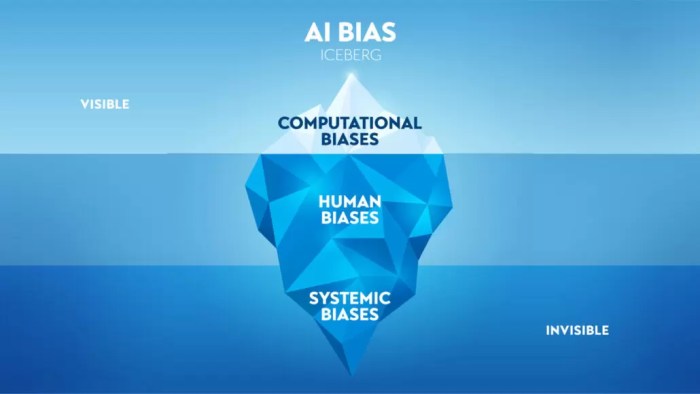
Algorithmic Bias and Fairness in Detection
AI algorithms are trained on datasets, and if these datasets reflect existing societal biases, the algorithms can perpetuate and even amplify these biases in their assessments. In the context of plagiarism detection, this can lead to unfair outcomes for certain groups of students.Algorithmic bias can manifest in several ways:
- Bias in Source Identification: If the datasets used to train the AI disproportionately represent certain types of writing (e.g., those from specific cultural backgrounds or educational systems), the algorithm may be more likely to flag writing styles that deviate from the dominant norm as plagiarized.
- Disproportionate Impact on Non-Native English Speakers: Students whose first language is not English may have different writing styles and patterns. AI trained primarily on native English text might incorrectly flag their work as plagiarized due to stylistic differences, even if the content is original.
- Impact on Students with Learning Differences: Students with learning disabilities, such as dyslexia, may also have unique writing patterns that could be misinterpreted by the algorithm as instances of plagiarism.
Addressing algorithmic bias requires careful attention to the data used to train the AI models. This includes:
- Diverse Datasets: Using diverse and representative datasets that include writing samples from various cultural backgrounds, linguistic profiles, and learning styles.
- Bias Detection and Mitigation: Regularly auditing the algorithm for bias and implementing strategies to mitigate identified biases. This might involve re-training the model with more balanced data or adjusting the algorithm’s parameters.
- Human Oversight: Integrating human review into the process to provide a second layer of assessment and to account for nuances that the AI may miss.
Inadvertent Penalization of Students from Diverse Backgrounds
The potential for bias in AI plagiarism detectors raises concerns about the potential for students from diverse backgrounds, including non-native English speakers, those with learning differences, and those from different cultural contexts, to be unfairly penalized. The algorithms, if not carefully designed and validated, may misinterpret stylistic variations or differences in writing conventions as instances of plagiarism.Examples of potential unfair penalization:
- Different Writing Styles: Students from different cultural backgrounds may employ distinct writing styles, structures, and rhetorical devices. An AI trained on Western academic writing might incorrectly flag these differences as plagiarism.
- Use of Indirect Language: Some cultures encourage indirect communication or the use of established phrases and idioms. An AI may not recognize these as acceptable stylistic choices and might incorrectly flag them as unoriginal.
- Limited Access to Resources: Students from under-resourced schools or communities may have limited access to the same writing support and resources as their peers. This can lead to differences in writing quality that an AI might misinterpret.
To mitigate these risks, institutions should:
- Provide Contextualized Feedback: Ensure that feedback from plagiarism detection tools is provided in context, considering the student’s background and writing style.
- Offer Writing Support: Provide comprehensive writing support services, including tutoring, workshops, and resources, that are tailored to the needs of diverse learners.
- Train Faculty: Train faculty to interpret the results of plagiarism detection tools with sensitivity and awareness of potential biases.
Transparency, Student Consent, and Ethical Implementation
Ethical implementation of AI plagiarism detection tools requires transparency, student consent, and a commitment to fairness and accountability. Institutions must be upfront about the use of these tools and how they impact students.Key aspects of ethical implementation include:
- Transparency in Usage: Clearly communicating to students how the tools are used, what data is collected, and how it is stored. Students should be informed about the purpose of the tools and how their work will be assessed.
- Informed Consent: Obtaining informed consent from students before using the tools. Students should have the option to opt out or request alternative assessment methods.
- Data Privacy and Security: Implementing robust data privacy and security measures to protect student data from unauthorized access or misuse. This includes complying with relevant data protection regulations.
- Human Oversight: Ensuring that all plagiarism detection results are reviewed by a human instructor. The AI should serve as a tool to assist instructors, not to replace their judgment.
- Feedback and Appeal Mechanisms: Providing students with clear feedback on their work and offering a mechanism for appealing any plagiarism accusations.
These measures will help ensure that the use of AI plagiarism detection tools is fair, equitable, and respects student rights.
The Role of Databases and Content Sources in AI-Powered Plagiarism Detection
The effectiveness of AI-powered plagiarism detection tools hinges significantly on the comprehensiveness and quality of their underlying databases and content sources. These sources serve as the reference points against which submitted student work is compared, allowing the algorithms to identify potential instances of plagiarism. The more extensive and diverse the content sources, the more robust and reliable the detection process becomes.
Without access to a wide array of textual data, the AI’s ability to accurately identify copied material is severely limited, potentially leading to both false positives and false negatives.
Types of Content Sources Utilized, Ai powered plagiarism detector for students
The databases employed by AI plagiarism detectors are multifaceted, drawing from various content types to ensure a thorough comparison. The scope and diversity of these sources directly influence the precision and reliability of the detection process.
- Academic Journals: These publications, which are peer-reviewed, form a critical component of the content sources. They provide access to scholarly research, theoretical frameworks, and empirical findings. The detector scans these journals for matching phrases, ideas, and arguments to identify instances where a student may have directly lifted content or inadequately cited sources. For instance, a student’s paper might be flagged if it contains passages identical to those found in a specific article published in a leading academic journal, like
-Nature* or
-The Lancet*. - Online Articles and Websites: The internet’s vastness necessitates inclusion of online content. News articles, blogs, and websites offer a broad spectrum of information. Detectors comb these sources for similarities, especially when students use online content without proper attribution. Consider a scenario where a student uses information from a news article on climate change; if the student fails to cite the source correctly, the AI will flag it as potentially plagiarized.
- Student Papers and Theses: Internal repositories of student work are often used. These collections enable the detection of self-plagiarism or instances where students copy from previous assignments or papers submitted by other students. For example, if a student submits an essay that closely mirrors a paper submitted by a different student in a prior semester, the AI will identify this duplication.
- Books and eBooks: A comprehensive plagiarism detection system must include books, both physical and digital, as sources. These sources are essential for verifying the originality of content and identifying any instances of plagiarism.
- Open-Access Resources: Open-access databases, such as those provided by universities and research institutions, are included. These provide a broad range of scholarly content that is accessible for comparison, enhancing the breadth of the sources.
Challenges in Maintaining Content Sources
Maintaining up-to-date and diverse content sources poses several challenges that can affect the accuracy of plagiarism detection. These challenges require continuous effort and investment to ensure the tool remains effective.
- Data Volume and Updates: The sheer volume of content is staggering, with new material appearing daily. Keeping databases current requires continuous indexing and updating. The rapid evolution of the internet and the publication of new academic articles mean that the sources must be constantly refreshed.
- Content Diversity and Scope: The content must be diverse to cover a wide array of topics, disciplines, and languages. This ensures the detection system is not limited by the subject matter. For example, a tool designed primarily for English-language content will be less effective in detecting plagiarism in a student’s paper written in another language.
- Accessibility and Copyright: Accessing and integrating copyrighted material requires navigating legal and ethical considerations. Permissions must be obtained to use protected content. This includes ensuring compliance with fair use guidelines and respecting intellectual property rights.
- Technical Infrastructure: Maintaining the infrastructure to store, index, and search large volumes of data is technically complex. This includes robust servers, efficient search algorithms, and the capacity to handle large-scale data processing.
- Language Barriers: Detecting plagiarism across multiple languages poses significant challenges. The algorithms must be able to understand and compare text in different languages, requiring advanced natural language processing capabilities.
Comparing Different AI-Powered Plagiarism Detection Software Available for Students
The proliferation of AI-powered plagiarism detection software has created a landscape of options for students seeking to ensure academic integrity. These tools utilize various algorithms and data sources to identify instances of unoriginal content, offering a range of features, pricing structures, and user interfaces. Understanding the nuances of each platform is crucial for students to make informed decisions about which tool best suits their needs and academic requirements.
This comparison delves into three prominent AI-powered plagiarism detection software options, analyzing their strengths, weaknesses, and overall usability.
Feature Analysis: Turnitin, Grammarly, and Copyleaks
Each software offers a distinct approach to plagiarism detection, reflecting the diversity in AI algorithms and data sources. Turnitin, a long-standing industry leader, leverages a vast database of academic papers and web content, coupled with sophisticated algorithms to identify similarities. Grammarly, known for its writing assistance features, integrates plagiarism detection as part of its comprehensive suite, utilizing natural language processing (NLP) to analyze text.
Copyleaks, a more recent entrant, employs advanced AI, including deep learning, to scan various document formats and online sources, including code, for potential plagiarism.
Turnitin’s primary strength lies in its comprehensive database, including institutional repositories and subscription-based content. Its similarity reports provide detailed information, highlighting matching sources and enabling students to understand the extent of any potential plagiarism. However, its interface can sometimes feel less intuitive than newer platforms. Grammarly offers a more user-friendly experience, integrated directly into its writing suggestions. While it effectively identifies basic plagiarism, its database might be less extensive than Turnitin’s, and its focus is broader than solely plagiarism detection.
Copyleaks distinguishes itself through its support for diverse file formats and code, appealing to students in STEM fields. It offers a balance between feature richness and a relatively simple interface, though its pricing structure can vary based on usage.
Pricing and User Interface Comparison
Pricing models and user interface designs are critical factors influencing a student’s choice of plagiarism detection software. These elements affect the accessibility and ease of use of the tool, impacting its effectiveness in promoting academic integrity.
Turnitin is often integrated into university learning management systems (LMS), offering access through institutional subscriptions. Students may not directly pay for its use, but this reliance on institutional access can be a limitation for those without it. The user interface, while functional, can be perceived as less modern compared to competitors. Grammarly employs a freemium model. Its basic plagiarism detection is available in the free version, with more advanced features, including enhanced grammar and writing style suggestions, available through a premium subscription.
The interface is intuitive and seamlessly integrates with writing platforms, providing immediate feedback. Copyleaks offers various pricing plans based on the number of pages scanned, with options for individual users and institutions. Its interface is clean and user-friendly, with options to upload documents directly or integrate with other applications. The pricing structure can be more flexible than Turnitin, but costs can accumulate depending on the volume of use.
Comparative Table
The following table provides a side-by-side comparison of the three software options, summarizing their key features, pricing, and ease of use. This format allows for a clear visualization of the differences between each tool.
| Feature | Turnitin | Grammarly | Copyleaks |
|---|---|---|---|
| Key Features | Comprehensive database, detailed similarity reports, integration with LMS, institutional access. | Basic plagiarism detection, grammar and writing style suggestions, user-friendly interface, browser extension. | Support for various file formats, code plagiarism detection, multi-language support, API integration. |
| Pricing | Typically institutional subscriptions, may be unavailable to individual students without institutional access. | Freemium model: Basic features free, premium subscription for advanced features. | Pay-per-scan or subscription, pricing varies based on page count and features. |
| Ease of Use | Functional but can feel less intuitive, requires institutional integration. | Highly user-friendly, seamless integration with writing platforms and browser extensions. | Clean and intuitive interface, straightforward document uploading and scanning. |
| Strengths | Extensive database, widely recognized and trusted in academia, detailed reports. | Ease of use, integration with writing tools, comprehensive writing assistance. | Support for diverse file types and code, flexible pricing options. |
| Weaknesses | Interface can be less intuitive, reliance on institutional access. | Database may be less extensive than Turnitin’s, primarily focused on general writing, less focus on academic sources. | Pricing can be variable, potential for false positives. |
Integrating AI Plagiarism Detectors into the Student Workflow
Integrating AI-powered plagiarism detectors into the student workflow is crucial for fostering academic integrity and improving writing skills. Students can leverage these tools to proactively identify and rectify potential instances of plagiarism, thereby developing a deeper understanding of proper citation practices and ethical research conduct. Responsible usage of these detectors involves viewing them as a supplementary resource, not a replacement for critical thinking and original work.
The objective is to refine writing, not simply to obtain a clean plagiarism report.
Responsible Usage of AI Plagiarism Detectors
To effectively incorporate AI plagiarism detectors, students must understand their limitations and use them responsibly. This involves treating the reports as feedback, not definitive judgments. It is vital to recognize that these tools can sometimes generate false positives or negatives, depending on the complexity of the text and the databases they consult.
- Early Integration: Students should utilize plagiarism detectors throughout the writing process, not just at the final submission stage. This allows for iterative improvements and the identification of issues early on.
- Contextual Analysis: Plagiarism reports provide similarity scores, but students must analyze the context of the flagged passages. A high similarity score doesn’t automatically equate to plagiarism; it may indicate proper citation is needed.
- Source Verification: Students should always verify the sources cited in the report. This includes checking for accuracy and ensuring that the cited sources support the claims made in their writing.
- Understanding Limitations: AI detectors are not infallible. They may struggle with paraphrasing that closely mimics the original text or with identifying plagiarism from sources not included in their databases. Students must exercise critical judgment.
- Focus on Improvement: The primary goal should be to improve writing skills and understanding of academic integrity, not just to achieve a low similarity score. Focus on rewriting, paraphrasing, and citing sources appropriately.
Interpreting Plagiarism Reports
Plagiarism reports provide valuable feedback that can significantly enhance writing quality and citation accuracy. Understanding how to interpret these reports is essential for maximizing their benefits. These reports typically highlight potentially plagiarized passages and provide information about the sources from which they originated.
- Similarity Score: The overall similarity score represents the percentage of text that matches content in the detector’s database. This score serves as a general indicator, but it should not be the sole determinant of plagiarism.
- Highlighted Passages: The report highlights specific sections of text that have potential matches. Students should carefully examine these passages to determine the extent of the similarity.
- Source Citations: The report identifies the sources that match the flagged passages. This allows students to check the original sources and verify the accuracy of their citations.
- Citation Recommendations: Some detectors offer suggestions for improving citations. These recommendations can help students learn the proper formatting and citation styles.
- Analyzing the Nature of Matches: Evaluate if the matches are direct quotes (requiring quotation marks and citations), paraphrased ideas (requiring proper citation), or common knowledge (which may not require citation).
Step-by-Step Guide: Using a Hypothetical AI Plagiarism Detector (Example: “WriteRight AI”)
This section provides a hypothetical example of how to use an AI plagiarism detector, “WriteRight AI”. Note that the interface and features may vary depending on the specific software.
Step 1: Account Creation and Login
Illustration: A screenshot of the WriteRight AI login page. The page features fields for email and password, a “Sign In” button, and a “Create Account” link. The design is clean and user-friendly, with the WriteRight AI logo prominently displayed.
Create an account on the WriteRight AI website or log in if you already have one. This typically involves providing an email address and creating a password.
Step 2: Uploading Your Document
Illustration: A screenshot of the WriteRight AI dashboard after logging in. The dashboard displays an “Upload Document” button prominently. Below this button, there is a section for “Recent Reports,” showing a list of previously scanned documents, their similarity scores, and the date of analysis.
Once logged in, you will be directed to the dashboard. Click the “Upload Document” button. You will be prompted to select the file from your computer (e.g., .doc, .docx, .pdf, .txt).
Step 3: Initiating the Plagiarism Check
Illustration: A screenshot showing the WriteRight AI interface after a document has been uploaded. A progress bar displays the status of the plagiarism check. Below the progress bar, there is an option to select the citation style (e.g., APA, MLA, Chicago). The interface also displays options for customizing the search parameters, such as excluding citations or bibliography.
After uploading, the system will begin analyzing your document. Select the appropriate citation style (e.g., APA, MLA) for your document. You may also have options to customize the check, such as excluding citations and bibliography from the analysis.
Step 4: Reviewing the Plagiarism Report
Illustration: A screenshot of the WriteRight AI report interface. The document text is displayed with highlighted passages, each color-coded to correspond to a specific source. Clicking on a highlighted passage opens a sidebar displaying the source text and the matching section from the student’s document. The interface provides options to navigate between flagged passages and view citation suggestions.
Once the analysis is complete, you will receive a plagiarism report. The report will highlight any potentially plagiarized passages and indicate the sources from which they originated. Review the report carefully.
Step 5: Analyzing Flagged Passages
Illustration: A close-up screenshot of a flagged passage in the WriteRight AI report. The flagged text is highlighted in red. A pop-up box appears when hovering over the highlighted text, displaying the matching source text and a suggestion for improving the citation.
Examine each flagged passage. Determine whether the similarity is due to a direct quote, a paraphrased idea, or common knowledge. If it’s a direct quote, ensure you have used quotation marks and proper citation. If it’s a paraphrased idea, check if you have cited the source correctly.
Step 6: Improving Citations and Rewriting
Illustration: A screenshot of the WriteRight AI interface showing a text editor with a highlighted passage. The interface provides options to rewrite the text, insert citations, and paraphrase the original text. The interface also displays citation examples in different styles (APA, MLA, Chicago).
Based on the report, revise your text. Rewrite any plagiarized passages in your own words. Insert or correct citations as needed. Utilize citation generators or style guides to ensure accuracy.
Step 7: Re-Checking (Optional)
Illustration: A screenshot showing the WriteRight AI dashboard after the document has been revised and re-uploaded. The revised document shows a lower similarity score compared to the original version. The dashboard indicates the date and time of each scan, allowing for easy comparison of the results.
After making revisions, you can re-upload your document to the detector to check for further improvements. This iterative process helps refine your writing and citation practices.
The Future of AI in Plagiarism Detection and Its Implications for Education
The trajectory of AI in plagiarism detection promises a significant evolution, driven by advancements in machine learning, natural language processing, and the integration of novel technologies. These developments are poised to reshape not only how plagiarism is identified but also the very landscape of student learning, research, and academic integrity. This section delves into these future possibilities, examining their potential impact and the challenges they present.
Advancements in Algorithm Sophistication
AI-powered plagiarism detection tools are rapidly evolving beyond simple text matching. Future iterations will likely incorporate more sophisticated algorithms, capable of understanding the
- semantic meaning* and
- contextual relevance* of text. This means the ability to identify paraphrasing, subtle alterations, and even the reuse of ideas without explicit citation will improve significantly.
- Deep Learning Models: Expect increased utilization of deep learning models, such as transformers, which excel at understanding the nuances of language. These models can identify plagiarism even when the original text is significantly altered. Consider the following scenario: A student submits a paper where the core argument is lifted from a research article, but the wording is changed. A future AI could identify the
-conceptual similarity* even if the words differ, by analyzing the
-vector representations* of the text and comparing them. - Contextual Analysis: Algorithms will be better at understanding the context of the writing. This includes analyzing the student’s previous work, their knowledge of the subject, and the overall style of the submitted document. If a student, typically writing in a basic style, suddenly produces a highly sophisticated piece of writing, the system could flag it for closer examination.
- Multimodal Analysis: The integration of multimodal analysis is another crucial advancement. This involves analyzing not just text but also other forms of content, such as images, videos, and code. For example, a student might plagiarize a diagram from a source. Future AI tools could identify this, even if the image is slightly modified.
Integration of New Technologies
Beyond algorithmic improvements, the future of plagiarism detection will be characterized by the integration of new technologies.
- Blockchain Technology: Blockchain could be used to create immutable records of student work, allowing for easier tracking of the evolution of a student’s ideas and writing. This provides a transparent and verifiable history of academic contributions.
- Collaboration Platforms: Integration with collaborative writing platforms will become more prevalent. As students work together, the AI can monitor their contributions and flag potential instances of plagiarism within a group project.
- Automated Feedback and Guidance: AI could offer automated feedback to students, guiding them towards better writing practices and citation habits. This could include real-time suggestions for paraphrasing, citation tools, and guidance on structuring arguments to avoid unintentional plagiarism.
A Futuristic AI Plagiarism Detection Interface
Imagine a plagiarism detection interface of the future. The primary interface displays a document with highlighted sections representing potential instances of plagiarism. The intensity of the highlight corresponds to the probability of plagiarism, allowing educators to quickly focus on the areas of greatest concern.
- Semantic Similarity Score: Beside each highlighted section, a “semantic similarity score” is displayed. This score represents the degree to which the text is semantically similar to other sources, even if the wording is different.
- Source Attribution Map: A “source attribution map” visually connects each flagged section to its potential sources. The map might show a network of connections, with the strength of the connections reflecting the degree of similarity. This visual representation quickly reveals the scope and origin of the potential plagiarism.
- Style Analysis: The interface includes a “style analysis” feature. This section displays a comparison of the student’s writing style with the style of the flagged sources. The system can identify discrepancies in vocabulary, sentence structure, and tone, providing additional evidence of potential plagiarism.
- Real-time Feedback Integration: Integration with writing platforms enables real-time feedback. As a student writes, the AI provides suggestions for improving originality and avoiding plagiarism, alongside suggestions for better citations.
These advancements pose both opportunities and challenges. While they can enhance academic integrity and support student learning, they also raise ethical considerations regarding data privacy and the potential for bias in AI algorithms.
Addressing Common Misconceptions about AI Plagiarism Detectors
AI-powered plagiarism detectors have become increasingly prevalent in educational settings, sparking both enthusiasm and apprehension. However, the technology’s capabilities are often misunderstood, leading to unrealistic expectations and potentially, misuse. It is crucial to dispel these misconceptions to foster a responsible and ethical approach to utilizing these tools. This section clarifies common misunderstandings, promoting a more nuanced understanding of AI plagiarism detection.
Misconception: AI Detectors Can Identify All Forms of Plagiarism
One of the most pervasive misconceptions is that AI plagiarism detectors are infallible and can identify all instances of plagiarism, regardless of complexity. This is demonstrably false. While these tools excel at identifying direct copying and paraphrasing that closely mirrors original sources, they often struggle with more subtle forms of plagiarism.
- Sophisticated Paraphrasing: Students can often rephrase information, using different sentence structures and vocabulary, to avoid detection. AI, while improving, may not always recognize the original source’s ideas and concepts. The detector assesses textual similarity, and highly reworded material may not trigger a high similarity score.
- Mosaic Plagiarism: This involves piecing together phrases and ideas from various sources without proper attribution. AI can struggle with this, particularly if the individual pieces are sufficiently altered to avoid direct matching. The detector’s effectiveness depends on the extent of the alteration and the degree of overlap with known sources.
- Self-Plagiarism: Submitting work previously submitted for another course is a form of plagiarism that can be challenging for some detectors, particularly if the student has access to the original submission. The detection often relies on the database’s ability to cross-reference against previously submitted work.
- Translation Plagiarism: Translating content from another language into the target language is a tactic that can sometimes evade detection. This is because the text’s structure and phrasing are significantly altered, reducing the similarity to the original source. The detector’s success depends on the detector’s multilingual capabilities and the degree of alteration.
This limitation does not diminish the value of AI detectors. Instead, it highlights the importance of recognizing them as tools that assist, not replace, human judgment. Educators must understand these limitations to interpret the results appropriately and focus on fostering critical thinking and original work.
Misconception: AI Detectors Stifle Creativity and Critical Thinking
A common concern is that the use of AI plagiarism detectors discourages creativity and critical thinking. This argument suggests that students, fearing detection, will be less likely to explore ideas and express them in their own unique voices. This is a potential risk if the tools are used punitively rather than as a learning aid.
- Focus on Compliance Over Learning: If the primary emphasis is on avoiding plagiarism, students might prioritize conforming to rules rather than engaging deeply with the material. This can lead to a surface-level understanding and a reluctance to take intellectual risks.
- Over-Reliance on Detection: Students might become overly reliant on the tools to check their work, neglecting the process of critical evaluation and self-reflection that is crucial for developing original thought.
- Perception of Punishment: When students perceive AI detection as a means of punishment, they may develop a negative association with the learning process. This can lead to a reduction in intrinsic motivation and a fear of expressing original ideas.
However, when used correctly, AI detectors can actually promote creativity and critical thinking. For instance, they can be used to help students understand proper citation and paraphrasing techniques, thereby freeing them to focus on developing their ideas. The key is to emphasize the process of learning and the importance of academic integrity, rather than simply avoiding plagiarism. The tools can serve as a diagnostic aid, helping students identify areas where their work could be improved, thus fostering a deeper understanding of the subject matter.
Misconception: AI Detectors are Always Accurate and Unbiased
The perception that AI plagiarism detectors are universally accurate and free from bias is another significant misconception. These tools are trained on datasets, and their performance can be affected by the composition and quality of these datasets.
- Bias in Training Data: If the datasets used to train the AI are biased (e.g., disproportionately representing certain authors, genres, or languages), the detector may exhibit biases in its detection capabilities. This could lead to unfair results for students whose work is outside the dataset’s scope.
- False Positives and False Negatives: All AI plagiarism detectors have the potential to generate false positives (incorrectly flagging original work as plagiarized) and false negatives (failing to detect instances of plagiarism). The rate of these errors can vary depending on the specific algorithm, the quality of the source database, and the nature of the submitted work.
- Interpretation of Similarity Scores: Similarity scores generated by the detector are not definitive proof of plagiarism. They are indicators that require careful interpretation by the instructor. Context, the nature of the source material, and the student’s work must be considered.
“A study by researchers at the University of California, Berkeley, found that certain AI plagiarism detectors were more likely to flag essays written by students from non-English speaking backgrounds as plagiarized, highlighting the potential for bias in the algorithms.”
This example demonstrates how algorithmic bias can disproportionately affect certain student populations. It underscores the importance of educators being aware of these limitations and using the tools judiciously. A responsible approach involves using the detectors as one component of a comprehensive assessment strategy, alongside human review and a focus on academic integrity education.
Conclusive Thoughts
In conclusion, AI-powered plagiarism detectors represent a significant advancement in safeguarding academic integrity. While these tools offer numerous benefits, it’s crucial to acknowledge their limitations and ethical implications. By understanding the core functionalities, advantages, and potential drawbacks of these systems, educators and students can leverage them responsibly to foster a culture of academic honesty, improve writing practices, and embrace the future of learning.
FAQ Resource
How do AI plagiarism detectors handle paraphrasing?
AI plagiarism detectors use algorithms that analyze semantic similarity, identifying instances where the meaning of a text has been copied, even if the words are changed. They assess the degree of paraphrasing and flag potential instances of plagiarism.
Are AI plagiarism detectors always accurate?
No, AI plagiarism detectors are not always perfectly accurate. They can produce false positives (flagging original work as plagiarized) and false negatives (failing to detect plagiarism). Factors like database size, language complexity, and the nature of the text influence their accuracy.
Can AI plagiarism detectors detect plagiarism from non-English sources?
The effectiveness of AI plagiarism detectors in detecting plagiarism from non-English sources varies. Some tools support multiple languages, but their accuracy depends on the availability and comprehensiveness of the reference databases in those languages.
How do AI plagiarism detectors impact student creativity?
When used responsibly, AI plagiarism detectors can encourage students to understand and correctly cite sources, thereby supporting creativity by enabling students to build upon and develop their own ideas rather than copying from others. However, over-reliance on these tools could potentially stifle original thought.
What is the role of educators in using AI plagiarism detectors?
Educators play a crucial role in implementing AI plagiarism detectors ethically and effectively. They should educate students about academic integrity, provide clear guidelines on proper citation practices, and use the tools as learning opportunities rather than solely as punitive measures.